
Cart

Monthly Archives

June 2026

Podiatrist vs Chiropodist vs GP: Who Treats Foot Problems Best?

By Blog No Comments

Podiatrist vs Chiropodist vs GP: Who Should You See for Foot Pain?

It’s one of the most commonly Googled questions in foot care, and the confusion is entirely understandable. If you’re trying to work out the difference between a podiatrist vs chiropodist, here’s the answer: there isn’t one. They’re the same profession. “Chiropodist” is the older term, whilst “podiatrist” is the modern, internationally recognised title adopted when the profession rebranded. Both terms refer to a healthcare professional specialising in the diagnosis, treatment, and prevention of foot and lower limb conditions.

The more useful question is: when should you see a podiatrist directly, and when should you go through your GP?

Don't suffer from foot pain any longer

Book your appointment with Bucks Foot Clinic

Book Appointment

When to Go Straight to a Podiatrist

  • Ingrown toenails podiatrists can often resolve these in a single appointment, whereas a GP referral adds weeks of waiting
  • Corns, calluses, and hard skin this is core podiatry, and GPs don’t typically treat these conditions
  • Verrucae that haven’t responded to pharmacy treatment professional treatments like Swift therapy are only available through podiatrists
  • Heel pain and plantar fasciitis a podiatrist offers biomechanical assessment and targeted treatment that goes beyond the painkillers and generic advice a GP can provide
  • Fungal nail infections professional debridement and treatment monitoring
  • Bunions, hammertoes, and foot deformities podiatrists specialise in management and can refer for surgery if needed
  • Diabetic foot care regular professional assessment and treatment is essential
  • Sports injuries and biomechanical problems gait analysis and orthotics are podiatry specialities

Struggling with this problem? Call Bucks Foot Clinic on 01494 304 849 or book online at bucksfootclinic.com for expert advice and treatment.

The Waiting Time Advantage

NHS podiatry services vary significantly by area, and waiting times can be lengthy. Many foot conditions worsen during a long wait, making treatment more complex when you finally get seen. Private podiatry offers immediate access at Bucks Foot Clinic, we can typically see you within days rather than weeks or months.

For professional advice before the problem worsens, Contact Bucks Foot Clinic

What to Look for in a Podiatrist

  • Registration with the Health and Care Professions Council (HCPC) this is a legal requirement for practising podiatrists in the UK
  • Membership of the Royal College of Podiatry demonstrates commitment to professional standards
  • Relevant experience in treating your specific condition
  • Clear pricing and transparent treatment plans
  • Positive patient reviews and testimonials

Skip the waiting list. See a specialist directly. Contact Bucks Foot Clinic today on 01494 304 849 to book your appointment, or visit bucksfootclinic.com. We have clinics in Amersham, Chesham, and Little Chalfont.

Why Choose Bucks Foot Clinic

Our podiatrists are HCPC registered, experienced across the full range of foot and lower limb conditions, and committed to providing honest, evidence-based care. We offer prompt appointments at our clinics in Amersham, Chesham, and Little Chalfont, with straightforward pricing and no hidden costs.
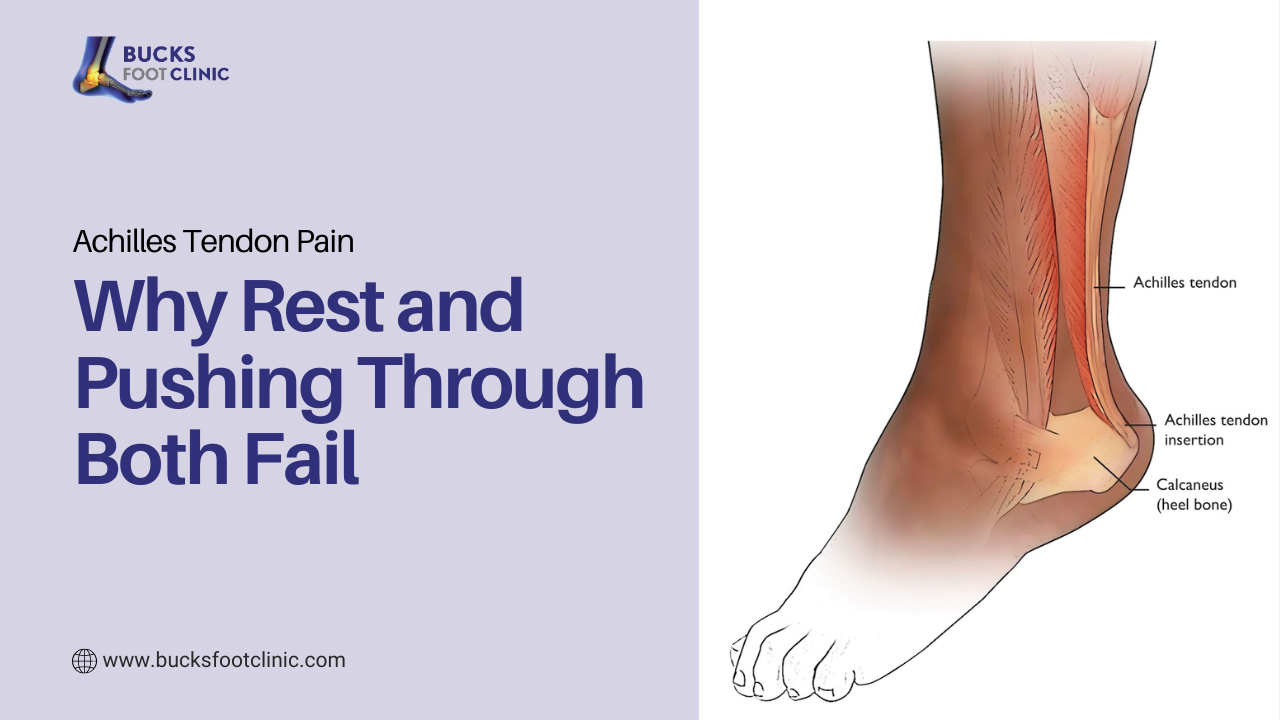

Achilles Tendon Pain: Why Rest and Pushing Through Both Fail

By Blog No Comments

Achilles Tendon Pain: Why “Running Through It” Is the Worst Advice You’ll Get

Your mate at the running club says push through it. The internet says rest it. Your physio friend says load it. Everyone has an opinion about Achilles tendon pain treatment, and the conflicting advice is maddening — especially when your Achilles is stiff every morning, burns during exercise, and simply refuses to get better. Here’s the truth: both complete rest and pushing through the pain are wrong. The correct approach is more nuanced, and understanding why makes all the difference.

Don't suffer from foot pain any longer

Book your appointment with Bucks Foot Clinic

Book Appointment

Tendinitis vs Tendinopathy: Why the Distinction Matters

Achilles “tendinitis” implies inflammation, but research now shows that most persistent Achilles problems aren’t inflammatory at all. The correct term is tendinopathy — a condition where the tendon tissue degenerates and fails to repair properly. The collagen fibres that make up the tendon become disorganised, the tendon thickens, and its ability to handle load decreases.

This distinction matters because treatments aimed at reducing inflammation (ice, anti-inflammatory drugs, complete rest) don’t address the actual problem. The tendon needs controlled, progressive loading to stimulate proper tissue repair and remodelling. Too little load (complete rest) causes further weakening. Too much load (pushing through pain) causes further damage. The sweet spot is structured rehabilitation.

Struggling with this problem? Call Bucks Foot Clinic on 01494 304 849 or book online at bucksfootclinic.com for expert advice and treatment.

How to Prevent Achilles Tendon Problems

  • Increase training volume and intensity gradually — avoid sudden jumps in mileage or speed work
  • Stretch your calves and Achilles tendons regularly, both before and after exercise
  • Strengthen your calves with eccentric exercises (heel drops from a step) as a preventative measure
  • Wear supportive footwear with adequate heel height for your activity
  • Warm up properly before exercise and avoid starting with explosive movements
  • Address any biomechanical issues early, particularly overpronation
  • Don’t ignore early symptoms — mild stiffness that resolves with activity can progress to significant tendinopathy if ignored

For professional advice before the problem worsens, Contact Bucks Foot Clinic

Why Self-Management Often Fails

The challenge with Achilles tendinopathy is that it requires precisely calibrated loading. Too much and the tendon worsens. Too little and it weakens. Generic advice like “rest until it feels better, then start running again” typically leads to a cycle of improvement and relapse because the tendon hasn’t been properly rehabilitated.

A podiatrist assesses your tendon, your biomechanics, and your activity level to design a rehabilitation programme that loads the tendon progressively and appropriately. This is combined with addressing any biomechanical factors (via orthotics) that contributed to the problem developing.

Achilles pain that won’t shift? Let’s find out why. Contact Bucks Foot Clinic today on 01494 304 849 to book your appointment, or visit bucksfootclinic.com. We have clinics in Amersham, Chesham, and Little Chalfont.

How Bucks Foot Clinic Treats Achilles Tendon Pain

  • Thorough assessment of the tendon including its thickness, tenderness, and response to loading
  • Biomechanical assessment to identify contributing factors
  • Structured eccentric loading programme tailored to your current capacity
  • Bespoke orthotics if biomechanical correction is needed
  • Shockwave therapy for chronic tendinopathy that hasn’t responded to exercise alone
  • Guidance on activity modification during rehabilitation our goal is to keep you moving, not to stop you

We also provide honest advice about recovery timelines. Achilles tendinopathy is typically a slow-healing condition, and we’d rather set realistic expectations than make promises we can’t keep. Most patients see significant improvement within 8–12 weeks of structured rehabilitation.

Children’s Foot Problems: What’s Normal and What Needs a Podiatrist

By Blog No Comments

Children’s Foot Problems Parents Shouldn’t Ignore (But Often Do)

As a parent, you’re tuned in to every cough, sniffle, and scraped knee. But children’s foot problems often fly under the radar. When your child complains of sore feet, you might assume it’s growing pains. When they walk with their toes turned in, you might figure they’ll grow out of it. Sometimes you’re right. But sometimes a podiatrist’s assessment could prevent years of unnecessary discomfort or catch a problem that won’t self-correct.

Don't suffer from foot pain any longer

Book your appointment with Bucks Foot Clinic

Book Appointment

What’s Normal in Developing Feet

Children’s feet are not simply small adult feet. They develop and change rapidly throughout childhood, and many things that look concerning are actually completely normal stages of development. Flat feet in toddlers and young children are expected — arches typically develop between ages 3 and 6. In-toeing (pigeon toes) is common in young children and usually resolves by age 8. Toe walking in toddlers who are learning to walk is normal initially but should be assessed if it persists beyond age 2–3.

Struggling with this problem? Call Bucks Foot Clinic on 01494 304 849 or book online at bucksfootclinic.com for expert advice and treatment.

When to See a Podiatrist

  • Your child consistently complains of foot, leg, or knee pain during or after activity
  • Flat feet persist beyond age 6 or are associated with pain, tripping, or fatigue
  • In-toeing or out-toeing is worsening rather than improving, or causes tripping
  • Your child is reluctant to participate in physical activity due to foot or leg discomfort
  • Verrucae that aren’t resolving with home treatment
  • Ingrown toenails causing pain or signs of infection
  • Heel pain during or after sport (possibly Sever’s disease, a common childhood growth-related condition)
  • Your child walks on their toes persistently beyond toddler years
  • You notice abnormal shoe wear patterns (one shoe wearing down much faster or differently than the other)

For professional advice before the problem worsens, Contact Bucks Foot Clinic

Sever’s Disease: The Most Common Cause of Children’s Heel Pain

If your active child (typically aged 8–14) is complaining of heel pain, particularly during and after sport, Sever’s disease is the most likely cause. It occurs when the growth plate at the back of the heel becomes irritated by the pull of the Achilles tendon during periods of rapid growth. It’s not serious, but it can be very painful and can sideline sporty children for extended periods if not managed properly.

A podiatrist can confirm the diagnosis, provide targeted treatment including stretching programmes, heel raises, and activity modification advice, and help your child stay active whilst the condition resolves.

How to Support Healthy Foot Development

  • Let young children go barefoot on safe surfaces — this strengthens foot muscles naturally
  • Ensure shoes fit properly and are replaced as your child’s feet grow (children’s feet can grow a full size in just a few months)
  • Have children’s feet measured professionally when buying shoes
  • Avoid hand-me-down shoes, as they’re moulded to another child’s foot shape
  • Encourage a range of physical activities to develop balanced foot and leg strength

How Bucks Foot Clinic Helps Children

We make children’s appointments as comfortable and non-threatening as possible. We explain everything in age-appropriate language, take time to build rapport, and ensure your child understands what’s happening. Our assessments are gentle and thorough, and treatment is tailored to your child’s age, activity level, and specific needs.

Concerned about your child’s feet? Contact Bucks Foot Clinic today on 01494 304 849 to book your appointment, or visit bucksfootclinic.com. We have clinics in Amersham, Chesham, and Little Chalfont.

What Happens at a Podiatrist Appointment? Your Complete Guide

By Blog No Comments

What Happens at a Podiatry Appointment? (It’s Nothing Like You Think)

If you’ve never been to a podiatrist before, the idea might feel a bit daunting. What exactly happens? Will it hurt? Do you need to be embarrassed about the state of your feet? How much does it cost? If these questions are stopping you from booking an appointment you know you need, this article is for you. Understanding what happens at a podiatrist appointment takes away the uncertainty and helps you arrive feeling confident rather than anxious.

Don't suffer from foot pain any longer

Book your appointment with Bucks Foot Clinic

Book Appointment

Before Your Appointment

There’s no special preparation needed. Simply wash your feet as you normally would and wear shoes and socks you can remove easily. Don’t worry about the current state of your feet podiatrists have seen everything, and we genuinely mean that. We’re not here to judge your feet; we’re here to help them.

If you’re taking any medications, have allergies, or have medical conditions (particularly diabetes), make a note of these. If you’ve been referred by a GP, bring any referral letters. Otherwise, you can self-refer directly no GP referral is needed for private podiatry.

Struggling with this problem? Call Bucks Foot Clinic on 01494 304 849 or book online at bucksfootclinic.com for expert advice and treatment.

What Happens During the Appointment

The consultation

Your podiatrist will begin by asking about your symptoms: what hurts, when it started, what makes it better or worse, and how it affects your daily life. They’ll ask about your medical history, medications, and any previous foot problems. This conversation is important because it helps them understand the full picture, not just the immediate symptom.

The examination

Your podiatrist will examine your feet thoroughly, looking at the skin, nails, joints, muscles, and overall foot structure. They may watch you walk to assess your gait. They might test sensation, circulation, or joint mobility depending on your presenting complaint. This is all completely painless.

The treatment

For routine conditions like corns, calluses, and toenail care, treatment typically happens in the same appointment. Using sterile instruments, your podiatrist will remove hard skin, trim and file nails, and address any specific problems. Professional nail care is precise, gentle, and nothing like the clumsy experience of trying to do it yourself.

For conditions requiring further investigation or specialist treatment, your podiatrist will explain the options, answer your questions, and agree a treatment plan together. Nothing happens without your understanding and consent.

For professional advice before the problem worsens, Contact Bucks Foot Clinic

Common Questions and Concerns

Will it hurt?

Routine podiatry is not painful. Professional instruments are sharp and precise, so removing hard skin and trimming nails is comfortable. If a procedure requires it (such as ingrown toenail surgery), local anaesthetic is used so you won’t feel a thing.

Do I need to be embarrassed about my feet?

Absolutely not. Podiatrists choose this career because they want to help people with foot problems. We’ve seen verrucae, fungal nails, ingrown toenails, cracked heels, corns, calluses, and every other foot condition imaginable. Nothing shocks us, and there’s nothing you could show us that we haven’t treated before.

How long does an appointment take?

A routine appointment typically lasts 30–45 minutes. Initial assessments or biomechanical consultations may take up to an hour. We don’t rush you’ll have plenty of time for questions.

How much does it cost?

Bucks Foot Clinic publishes prices on our website for full transparency. We’ll always discuss costs with you before any treatment, so there are no surprises. Many patients find that the cost of private podiatry is far less than they expected, particularly when weighed against the relief it provides.

Ready to book your first appointment? There’s nothing to be nervous about. Contact Bucks Foot Clinic today on 01494 304 849 to book your appointment, or visit bucksfootclinic.com. We have clinics in Amersham, Chesham, and Little Chalfont.

How to Prevent Foot Problems Between Appointments

  • Wash and thoroughly dry your feet daily, especially between the toes
  • Moisturise your feet regularly to prevent dry, cracked skin
  • Cut toenails straight across, not too short, using proper nail clippers
  • Wear well-fitting, supportive footwear appropriate for your activities
  • Inspect your feet regularly for changes, new lumps, or developing problems
  • Don’t ignore foot pain early treatment is almost always simpler and more effective

Why Bucks Foot Clinic Is a Great Place to Start

We pride ourselves on being welcoming, non-judgemental, and thorough. Whether you’re coming for routine nail care or a complex biomechanical issue, you’ll be treated with respect, expertise, and genuine care. We have clinics in Amersham, Chesham, and Little Chalfont, offering convenient locations across Buckinghamshire.

First-time visitors are often surprised by how positive the experience is and how much better their feet feel afterwards. Many become regular patients, not because they have to, but because they value the difference professional foot care makes to their comfort and confidence.

athlete’s foot won’t go away

Athlete’s Foot Won’t Clear Up? It Might Be Something Else

By Blog No Comments

Athlete’s Foot Won’t Go Away? You Might Not Actually Have It

You’ve been applying antifungal cream religiously for weeks. Maybe you’ve tried different brands, sprays, and powders. Yet that itchy, flaky, red skin between your toes or across the soles of your feet simply will not clear up. Before you buy another tube, consider this: what if the cream isn’t working because you don’t actually have athlete’s foot? With 135,000 monthly UK searches for athlete’s foot, it’s one of the most self-diagnosed conditions in the country and self-diagnosis gets it wrong more often than you’d think

Don't suffer from foot pain any longer

Book your appointment with Bucks Foot Clinic

Book Appointment

Conditions That Mimic Athlete’s Foot

Eczema (atopic dermatitis)

Eczema on the feet produces dry, itchy, red patches that look remarkably similar to athlete’s foot. However, eczema is an inflammatory condition, not a fungal one, and antifungal cream won’t help. In fact, some antifungal products can irritate eczematous skin and make symptoms worse.

Psoriasis

Foot psoriasis can cause thickened, scaly patches on the soles, around the heels, and between the toes. It’s often mistaken for athlete’s foot, particularly when it first appears. Psoriasis requires completely different treatment.

Contact dermatitis

An allergic or irritant reaction to materials in shoes, socks, detergents, or even the antifungal cream you’re using can produce symptoms identical to athlete’s foot. If treatment seems to make things worse, contact dermatitis should be considered.

Pitted keratolysis

A bacterial (not fungal) infection that causes small pits in the soles of the feet, often accompanied by an unpleasant odour. It’s common in people who sweat heavily and wear enclosed shoes, and it doesn’t respond to antifungal treatment.

Struggling with this problem? Call Bucks Foot Clinic on 01494 304 849 or book online at bucksfootclinic.com for expert advice and treatment.

How to Prevent Athlete’s Foot

  • Keep your feet clean and dry, particularly between the toes
  • Change socks daily and after exercise, choosing moisture-wicking materials
  • Alternate shoes to allow them to dry fully between wears
  • Wear flip-flops in communal showers, changing rooms, and pool areas
  • Don’t share towels, socks, or shoes
  • Use an antifungal foot powder in your shoes if you’re prone to sweaty feet
  • Treat any fungal infection promptly to prevent it spreading to your nails

For professional advice before the problem worsens, Contact Bucks Foot Clinic

Why Professional Diagnosis Matters

Self-treating with antifungal cream when you don’t have a fungal infection wastes time, money, and can worsen the actual condition. A podiatrist can examine your feet, take skin samples if needed, and provide an accurate diagnosis. This means treatment targets the actual problem from day one, rather than spending weeks or months guessing. 

How Bucks Foot Clinic Treats Foot Skin Conditions

We assess your skin condition thoroughly, taking into account its appearance, location, duration, and your medical history. Where necessary, we can arrange professional testing to confirm or rule out fungal infection. Once accurately diagnosed, we provide targeted treatment and advice to resolve the condition effectively, along with prevention strategies to reduce the risk of recurrence.

Foot condition that won’t clear up? Get the right diagnosis. Contact Bucks Foot Clinic today on 01494 304 849 to book your appointment, or visit bucksfootclinic.com. We have clinics in Amersham, Chesham, and Little Chalfont.