Cart

Monthly Archives

March 2026

cracked heels treatment

Cracked Heels: Cosmetic Annoyance or Serious Foot Problem?

By Blog No Comments

Cracked Heels Are More Than a Cosmetic Problem: When to Worry

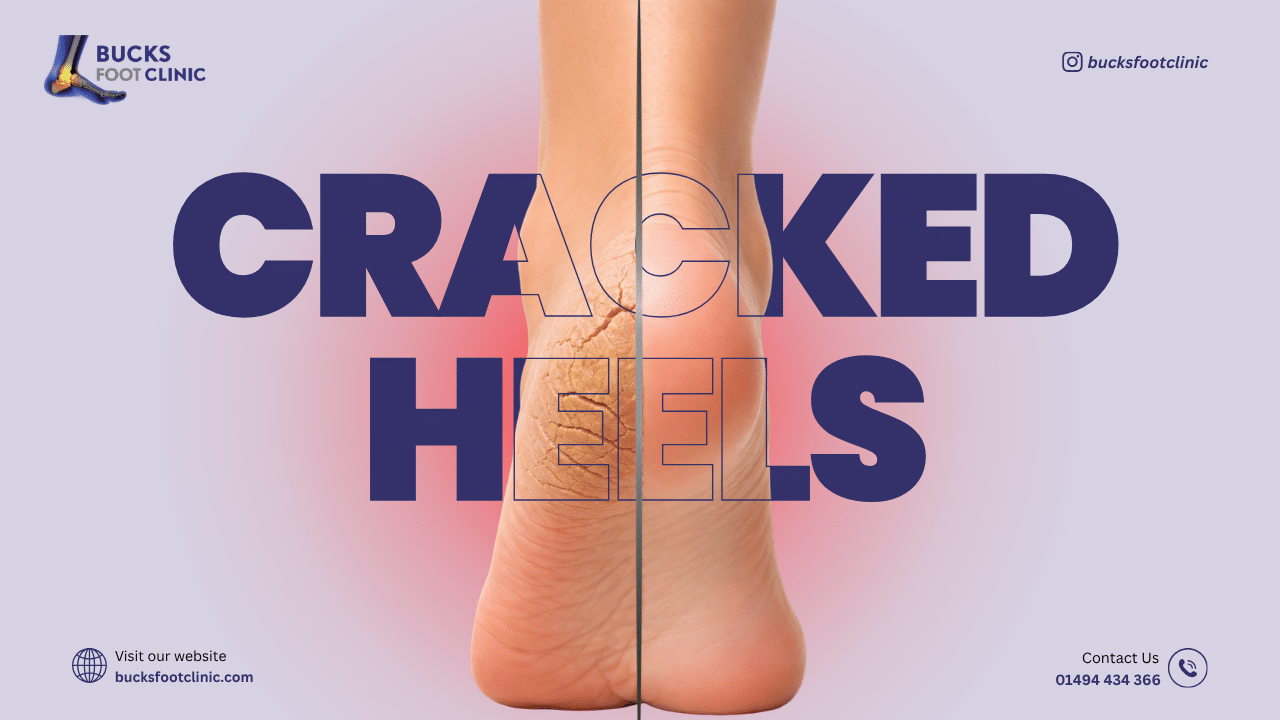
Cracked heels are one of those foot problems that people dismiss as purely cosmetic, something to deal with before sandal season and ignore the rest of the year. But cracked heels treatment is among the most searched foot health topics in the UK, with searches surging by 84% in recent months. And there’s a reason for that: for many people, cracked heels aren’t just unsightly. They’re painful, persistent, and occasionally a sign of something more serious.

What Causes Cracked Heels?

Your heel skin is naturally thicker than skin elsewhere on your body because it bears your full weight with every step. When this skin becomes excessively dry, it loses its elasticity. As you walk, the fat pad under your heel expands sideways under pressure, and if the surrounding skin isn’t supple enough to accommodate this movement, it splits, creating fissures.

Several factors accelerate this process: prolonged standing, open-backed shoes that allow the heel to expand freely, dry indoor air (particularly during winter), certain skin conditions like eczema and psoriasis, underactive thyroid, and simply not moisturising your feet regularly. Being overweight increases pressure on the fat pad, making cracks more likely. Importantly, diabetes can also cause excessively dry skin on the feet due to autonomic neuropathy affecting sweat gland function.

Don't suffer from foot pain any longer

Book your appointment with Bucks Foot Clinic

Book Appointment

When Cracked Heels Become a Medical Concern

Superficial dryness that responds to regular moisturising is generally manageable at home. But deep fissures that bleed, cause pain when walking, or show signs of infection (redness, warmth, swelling, discharge) need professional attention. For people with diabetes, even minor cracks in the skin represent a significant risk because reduced sensation (peripheral neuropathy) may mean you don’t feel the damage, and poor circulation can delay healing. What seems like a simple cracked heel can escalate into a serious ulcer or infection.

Struggling with this problem? Call Bucks Foot Clinic on 01494 434366 or book online at bucksfootclinic.com for expert advice and treatment.

How to Prevent Cracked Heels

  • Moisturise your heels daily with a urea-based cream (at least 10% urea) this is significantly more effective than standard body lotions
  • Apply moisturiser after bathing when the skin is still slightly damp to lock in hydration
  • Avoid open-backed shoes and sandals if you’re prone to cracking, as they allow excessive heel expansion
  • Use a pumice stone gently on damp skin (never dry) once or twice a week to manage hard skin buildup before it becomes problematic
  • Stay hydrated your skin’s moisture levels are influenced by your overall hydration
  • Avoid standing for long periods without breaks, and use supportive footwear with enclosed heels
  • If you have diabetes, inspect your feet daily and moisturise religiously as part of your foot care routine

For professional advice before the problem worsens, Contact Bucks Foot Clinic

Why a Podiatrist Does More Than a Foot Peel

Foot peels, pumice stones, and moisturisers address surface symptoms, but they can’t resolve deep fissures or address the underlying cause. Over-aggressive filing or peeling can actually stimulate the skin to produce more hard skin as a protective response, creating a frustrating cycle.

A podiatrist uses professional debridement techniques to safely remove hard, calloused skin around the heel revealing the healthy tissue beneath and allowing deep fissures to heal properly. We also investigate why the cracking is happening: is it biomechanical pressure, a skin condition, systemic disease, or simply inadequate care? Treating the cause prevents recurrence.

How Bucks Foot Clinic Treats Cracked Heels

We provide thorough, professional debridement using sterile instruments to remove thick, callused skin and clean deep fissures. For infected cracks, we provide appropriate wound care and management. We advise on medical-grade moisturisers and emollients tailored to your skin type. If an underlying condition is suspected, we liaise with your GP for appropriate investigation. For patients with diabetes, cracked heel treatment is integrated into comprehensive diabetic foot care.

Cracked heels that won’t heal? Don’t ignore them. Contact Bucks Foot Clinic today on 01494 434366 to book your appointment, or visit bucksfootclinic.com. We have clinics in Amersham, Chesham, and Little Chalfont.

running foot pain podiatrist

Running Foot Pain? Why New Trainers Won’t Fix the Real Problem

By Blog No Comments

The Real Reason Runners Get Injured (It’s Not Your Trainers It’s Your Feet)

Running in the UK has never been more popular. Strava running clubs saw a 59% increase in memberships recently, and almost half of running event participants are first-timers. Whether you’re training for a parkrun, tackling your first half-marathon, or simply enjoying the mental health benefits of a regular jog, running is brilliant for you until your feet start fighting back. If you’re experiencing running foot pain, your first instinct is probably to blame your trainers. But a podiatrist would tell you that shoes are rarely the root cause.

Common Running Injuries That Start in Your Feet

Plantar fasciitis

That stabbing heel pain first thing in the morning or after long runs. Excessive pronation, tight calves, and sudden increases in mileage are typical triggers.

Shin splints (medial tibial stress syndrome)

Pain along the front or inner edge of the shinbone. Often blamed on hard surfaces or worn shoes, but frequently caused by overpronation and poor foot mechanics.

Achilles tendinopathy

Pain and stiffness in the Achilles tendon, particularly during and after running. Biomechanical issues in the foot alter the loading pattern on the tendon.

Metatarsalgia

Burning pain in the ball of the foot. Occurs when forefoot pressure distribution is uneven, often due to foot shape or gait mechanics.

Black toenails and blisters

Repetitive trauma from shoes that don’t fit properly or from toes gripping during downhill running due to poor foot mechanics.

Stress fractures

Tiny cracks in the bones of the foot caused by repetitive impact. Higher risk in runners with poor biomechanics, especially those who increase training too quickly.

Don't suffer from foot pain any longer

Book your appointment with Bucks Foot Clinic

Book Appointment

How to Prevent Running Injuries

  • Increase your mileage gradually follow the 10% rule (never increase weekly distance by more than 10%)
  • Vary your running surfaces to reduce repetitive stress on the same structures
  • Warm up properly before runs and cool down with stretching afterwards
  • Strengthen your feet, calves, glutes, and core these muscles support your running biomechanics
  • Replace running shoes every 400–500 miles, even if they still look fine externally
  • Listen to your body persistent pain that doesn’t settle with a day or two of rest needs professional attention
  • Consider a professional gait analysis before problems develop, especially if you’re training for a longer event

Struggling with this problem? Call Bucks Foot Clinic on 01494 434366 or book online at bucksfootclinic.com for expert advice and treatment.

Why New Trainers Won’t Fix the Problem

When pain strikes, most runners head straight to a specialist running shop for gait analysis and new shoes. There’s nothing wrong with getting advice on footwear, but a running shop assistant however knowledgeable isn’t a clinician. They can observe your gait on a treadmill for a few minutes, but they can’t assess your joint range of motion, muscle strength, foot structure, or identify underlying conditions.

Buying new trainers for a biomechanical problem is like buying new tyres for a car with misaligned wheels. The tyres might be excellent, but they’ll wear unevenly because the underlying issue hasn’t been addressed. Professional podiatric assessment examines the complete biomechanical chain from your feet through your ankles, knees, and hips to identify exactly where things go wrong.

For professional advice before the problem worsens, Contact Bucks Foot Clinic

How Bucks Foot Clinic Helps Runners

Our runner’s gait analysis goes far beyond watching you jog on a treadmill. We assess your foot posture, joint mobility, muscle strength, and running biomechanics in detail. We identify subtle issues like forefoot varus, rearfoot valgus, or tibial rotation that standard running shop analysis misses.

Based on our findings, we create bespoke orthotics designed specifically for running, provide targeted rehabilitation exercises, give evidence-based footwear recommendations, and develop a plan to get you back to running and keep you running without recurring injuries. We treat runners of all levels, from beginners to ultramarathon athletes.

Don’t let foot pain end your running journey. Contact Bucks Foot Clinic today on 01494 434366 to book your appointment, or visit bucksfootclinic.com. We have clinics in Amersham, Chesham, and Little Chalfont.
flat feet

Flat Feet Causing Knee and Back Pain? The Hidden Connection

By Blog No Comments

Flat Feet Are Ruining More Than Your Arches: The Chain Reaction You Don’t See

You’ve been to the GP about your knee pain. You’ve seen a physiotherapist about your lower back. You’ve even wondered whether your hip discomfort might need a specialist referral. But has anyone looked at your feet? For many people suffering from flat feet pain, the connection between collapsed arches and problems further up the body is the missing piece of a frustrating puzzle. Your feet are the foundation of your entire skeletal structure, and when that foundation is off, everything above it compensates.

What Are Flat Feet?

Flat feet, known medically as pes planus, occur when the arches of the foot collapse, causing the entire sole to make contact with the ground when standing. Some degree of arch variation is completely normal, but when the arch flattens excessively, it changes the way forces travel through your feet, ankles, knees, hips, and spine.

There are two main types. Flexible flat feet are the most common: the arch disappears when you stand but reappears when you’re sitting or standing on tiptoe. Rigid flat feet have a permanently flattened arch regardless of position and are typically caused by structural abnormalities in the bones.

Struggling with this problem? Call Bucks Foot Clinic on 01494 434366 or book online at bucksfootclinic.com for expert advice and treatment.

The Domino Effect: How Flat Feet Cause Pain Elsewhere

When your arches collapse, your foot rolls inward excessively with every step a movement called overpronation. This sets off a chain reaction that travels up through your entire body. Your ankles roll inward, placing strain on the ligaments and tendons. Your shin bones rotate internally, pulling your knees out of their optimal alignment. Your thigh bones follow suit, altering hip mechanics. Your pelvis tilts to compensate, and your lower back muscles work overtime to keep you upright.

This isn’t theoretical it’s biomechanics. Many patients who come to us with chronic knee pain, shin splints, hip discomfort, or lower back pain discover that flat feet are the underlying driver. The pain isn’t in their feet, so they never think to look there. But the solution often is.

How to Prevent Problems from Flat Feet

  • Wear supportive footwear with firm arch support and structured heel counters avoid completely flat shoes, ballet pumps, and unsupportive sandals
  • Strengthen the muscles that support your arches with exercises like towel scrunches, single-leg balance work, and calf raises
  • Maintain a healthy weight to reduce the load on your foot structures
  • Choose activity-appropriate footwear for exercise motion control running shoes can help manage overpronation
  • Stretch your calves, Achilles tendons, and plantar fascia regularly to maintain flexibility
  • If your children have flat feet, seek early assessment childhood intervention can prevent problems developing in adulthood
  • Avoid prolonged walking barefoot on hard surfaces if you know you have flat feet

Don't suffer from foot pain any longer

Book your appointment with Bucks Foot Clinic

Book Appointment

Why a Podiatrist Beats Generic Insoles

If flat feet are causing you pain, the solution isn’t simply buying arch support insoles from a pharmacy. Generic insoles are made for an average foot shape and nobody’s foot is truly average. They may provide temporary comfort, but they cannot correct the specific biomechanical issues driving your symptoms.

A podiatrist conducts a comprehensive biomechanical assessment that includes gait analysis (watching how you walk), pressure mapping, joint range of motion testing, and muscle strength assessment. This reveals exactly how your flat feet are affecting your body and what corrections are needed.

  • Bespoke orthotics are prescribed based on your individual assessment, addressing your specific foot mechanics rather than applying a one-size-fits-all approach
  • A podiatrist can differentiate between flexible and rigid flat feet, which require completely different management strategies
  • Professional assessment identifies whether your flat feet are the cause of symptoms elsewhere or whether another condition is contributing
  • Orthotics are just one part of a complete treatment plan that may include strengthening exercises, stretching programmes, and footwear recommendations

Think flat feet might be behind your pain? Contact Bucks Foot Clinic today on 01494 434366 to book your appointment, or visit bucksfootclinic.com. We have clinics in Amersham, Chesham, and Little Chalfont.

How Bucks Foot Clinic Treats Flat Feet

Our biomechanical assessments are thorough and detailed. We examine your feet, watch you walk, assess your joint mobility, and consider your whole body mechanics. From this assessment, we design bespoke orthotics that are crafted specifically for your feet correcting the degree of pronation, supporting your arches appropriately, and redistributing pressure to relieve strain on the structures that have been overworking.

We also provide targeted exercise programmes to strengthen the muscles supporting your arches and improve ankle stability. For children with flat feet, we offer early assessment and intervention to guide healthy foot development.

If your knees hurt, your back aches, or your hips feel stiff, it might be time to look down. The answer to pain above could be in your foundations below.

For professional advice before the problem worsens, Contact Bucks Foot Clinic