
Cart

Monthly Archives

February 2026

Plantar Fasciitis

Why Does My Heel Hurt in the Morning? Plantar Fasciitis Explained

By Blog No Comments

Why Does My Heel Hurt First Thing in the Morning? The Truth About Plantar Fasciitis

Your alarm goes off. You swing your legs out of bed, plant your feet on the floor, and the moment you stand up, a sharp, stabbing pain shoots through your heel. You hobble to the bathroom like you’ve aged thirty years overnight. Sound familiar? If this plantar fasciitis morning heel pain has become your daily routine, you’re far from alone. Plantar fasciitis is the single most common cause of heel pain in the UK, and it affects roughly one in ten people at some point during their lifetime.

The good news? It’s entirely treatable. The bad news? Most of the advice you’ll find online either doesn’t work or actively makes things worse. Let’s separate the facts from the myths and get you back on your feet, literally.

What Actually Is Plantar Fasciitis?

The plantar fascia is a thick, fibrous band of tissue that runs along the sole of your foot, connecting your heel bone to your toes. Think of it like a bowstring supporting the arch of your foot. Every time you take a step, this tissue absorbs shock, supports your weight, and helps propel you forward.

When the plantar fascia becomes irritated or develops tiny tears, usually from repetitive strain or excessive pressure, it thickens, tightens, and becomes painful. This is plantar fasciitis. The term technically means inflammation, although modern research suggests it’s more accurately a degenerative condition, with the tissue breaking down rather than simply swelling up.

Why Does It Hurt More in the Morning?

This is the question everyone asks, and the answer is wonderfully logical once you understand it. While you sleep, your foot relaxes into a pointed-toe position. In this position, the plantar fascia shortens and tightens overnight, almost like a rubber band that’s been held slack for hours. The moment you stand up and flatten your foot against the floor, that tightened fascia is suddenly stretched under your full body weight. The result is that characteristic stabbing pain with your first steps.

The same mechanism explains why pain returns after sitting for long periods. Any time the fascia shortens during rest and then gets rapidly loaded, it protests. As you walk around and the tissue gradually warms up and stretches, the pain typically eases only to return after your next period of rest.

Don't suffer from foot pain any longer

Book your appointment with Bucks Foot Clinic

Book Appointment

Common Myths About Plantar Fasciitis

Myth 1: Heel spurs cause the pain

Many people receive an X-ray showing a heel spur and assume that’s the source of their agony. In reality, heel spurs are found in many people who have absolutely no pain at all. The spur forms as a response to stress on the heel, but it’s rarely the actual cause of your discomfort. Treating the spur alone won’t fix the problem.

Myth 2: You just need to rest

Complete rest might sound logical, but plantar fasciitis is one of those frustrating conditions where doing nothing can actually make things worse. The tissue needs controlled, gradual loading to heal properly. Total rest allows the fascia to tighten further, meaning your first steps after resting are even more painful.

Myth 3: Any insole will help

Grabbing a £10 gel insole from the pharmacy might provide temporary cushioning, but it cannot correct the biomechanical issues that caused your plantar fasciitis in the first place. Generic insoles are designed for average feet. Your feet aren’t average they’re uniquely yours, with their own arch height, gait pattern, and pressure points.

Struggling with this problem? Call Bucks Foot Clinic on 01494 434366 or book online at bucksfootclinic.com for expert advice and treatment.

How to Prevent Plantar Fasciitis

  • Wear supportive footwear with good arch support and cushioned soles avoid walking barefoot on hard floors, especially first thing in the morning
  • Replace worn-out trainers regularly, particularly if you run or walk frequently (every 400–500 miles is the general guideline)
  • Maintain a healthy weight to reduce the load on your plantar fascia with every step
  • Stretch your calves and feet daily, especially before and after exercise tight calf muscles are one of the biggest contributing factors
  • Increase activity levels gradually rather than making sudden jumps in distance or intensity
  • Avoid prolonged standing on hard surfaces without breaks if your job requires it, invest in proper supportive footwear or an anti-fatigue mat
  • Strengthen the intrinsic muscles of your feet with towel scrunches and marble pickups

For professional advice before the problem worsens, Contact Bucks Foot Clinic

Why Home Remedies Fall Short

If you’ve been rolling a frozen water bottle under your foot, stretching your calves against a wall, and hoping for the best, you’re doing the right things but likely not enough. Home remedies address symptoms without identifying the root cause. Plantar fasciitis develops for a reason: it might be flat feet causing excessive pronation, tight calf muscles altering your gait, or a sudden increase in activity your body wasn’t prepared for.

Without understanding why your plantar fascia became overloaded, you’re treating the effect whilst ignoring the cause. This is why so many people experience the condition repeatedly. A podiatrist doesn’t just treat your heel pain they investigate the biomechanical chain that led to it.

Why See a Podiatrist for Plantar Fasciitis

  • Accurate diagnosis — your heel pain might not actually be plantar fasciitis. Conditions like Achilles tendinopathy, stress fractures, tarsal tunnel syndrome, and fat pad atrophy all mimic similar symptoms. A podiatrist can differentiate between these and ensure you receive the correct treatment.
  • Biomechanical assessment — a thorough gait analysis reveals hidden issues like overpronation, leg length discrepancy, or muscle imbalances that generic advice simply cannot identify.
  • Bespoke orthotics — custom-made insoles designed specifically for your feet redistribute pressure, support your arch correctly, and address the underlying mechanical fault driving your condition.
  • Advanced treatments — professional options such as shockwave therapy, ultrasound-guided treatments, and structured rehabilitation programmes have significantly higher success rates than home care alone.
  • Faster recovery — with professional guidance, most patients see meaningful improvement within weeks rather than the months (or years) that self-management often takes.

How Bucks Foot Clinic Treats Plantar Fasciitis

At Bucks Foot Clinic, we begin with a comprehensive assessment of your foot mechanics, medical history, and lifestyle. We examine how you walk, assess your foot posture, and identify the specific factors driving your heel pain. From there, we create a tailored treatment plan that may include:

  • Bespoke orthotics crafted to your exact foot shape and biomechanical needs
  • Targeted stretching and strengthening programmes designed for your specific muscle imbalances
  • Shockwave therapy for chronic cases that haven’t responded to conservative treatment
  • Footwear advice tailored to your lifestyle, whether you’re a runner, a nurse on twelve-hour shifts, or someone who spends most of their day at a desk
  • Ongoing support and follow-up to ensure your recovery stays on track

Plantar fasciitis doesn’t have to define your mornings. With the right diagnosis and professional treatment, the vast majority of patients recover fully and return to all the activities they love.

Don’t let heel pain control your life. Contact Bucks Foot Clinic today on 01494 434366 to book your appointment, or visit bucksfootclinic.com. We have clinics in Amersham, Chesham, and Little Chalfont.

Ingrown toenail after pedicure

Ingrown Toenail After Pedicure – What Went Wrong?

By Blog No Comments

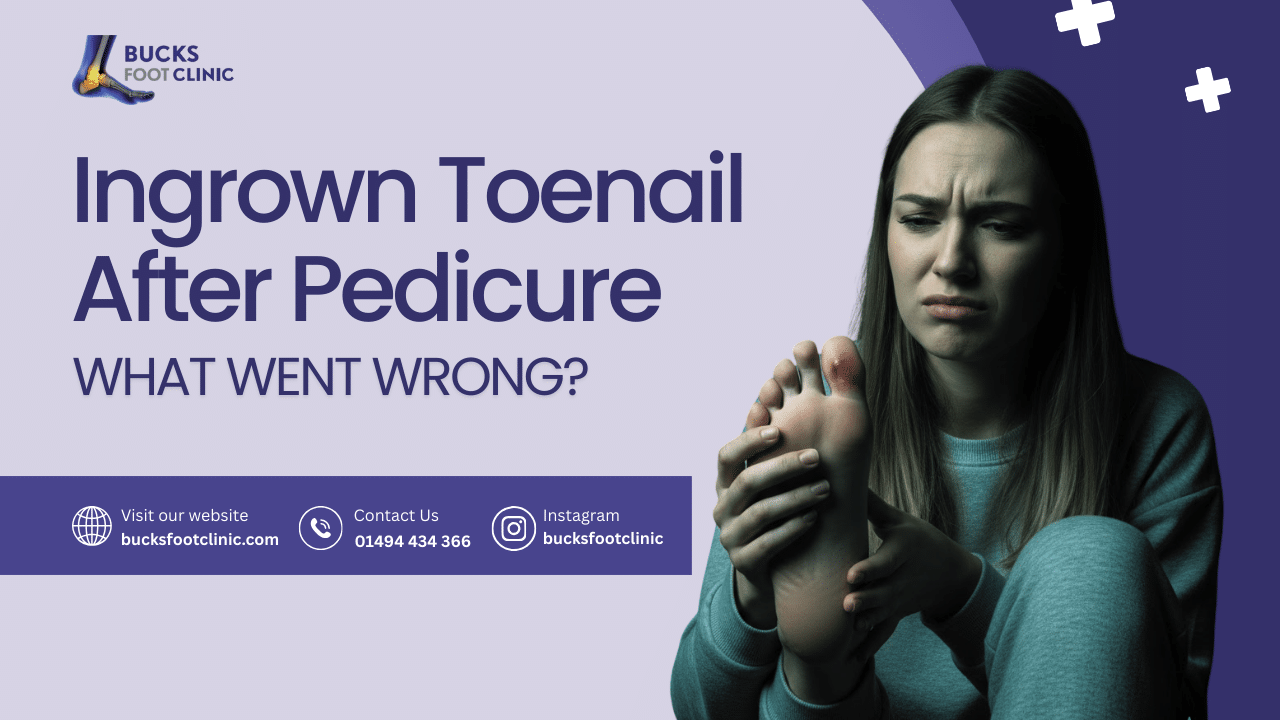
You left the nail salon feeling pampered with beautifully groomed feet, but days or weeks later, you’re experiencing throbbing pain in your toe. An ingrown toenail has developed where previously there was none. Whilst pedicures are generally safe when performed correctly, improper techniques can damage nails and surrounding skin, leading to painful ingrown toenails and infections.

Understanding what went wrong, recognising the warning signs of problems, and knowing how to prevent pedicure-related nail damage helps you protect your foot health whilst still enjoying professional nail care. At Bucks Foot Clinic, we regularly treat pedicure-related ingrown toenails and infections. If you’re experiencing problems after a pedicure, contact us on 01494 434366 for expert assessment and treatment.

Common Pedicure Mistakes That Cause Ingrown Toenails

Cutting nails too short is perhaps the most frequent error. Nail technicians often cut nails very short for aesthetic reasons, but this leaves the nail bed exposed and allows surrounding skin to fold over the short nail edge. As the nail regrows, it may grow into this folded skin, causing an ingrown toenail. Toenails should be left slightly longer than the toe tip, approximately 1-2mm beyond the flesh.

Rounding or tapering the nail corners creates curved edges more likely to grow into the surrounding skin. Whilst this rounded shape might look attractive, it’s inappropriate for toenails due to the pressure of walking and standing. Toenails should be cut straight across to prevent ingrown growth.

Aggressive cuticle work can damage the delicate skin around the nail, creating entry points for bacteria. Cutting or pushing back cuticles too aggressively removes the protective barrier that prevents infection. Over-filing nail edges with coarse files can create micro-tears and weakened areas that may split or grow irregularly. Using non-sterile instruments poses serious infection risks, potentially introducing bacteria directly into any small cuts or damaged skin.

Applying excessive pressure during buffing or callus removal can cause trauma to the nail bed or surrounding tissue. Leaving sharp nail edges or spicules after cutting can catch on socks and create painful splits or encourage ingrown growth.

Don't suffer from foot pain any longer

Book your appointment with Bucks Foot Clinic

Book Appointment

Immediate Warning Signs After a Pedicure

Some problems become apparent immediately or within hours of your pedicure. Bleeding from the nail area indicates the technician has cut the skin or removed too much nail. Visible cuts or nicks around the nail edge are entry points for bacteria and may become infected. Sharp, painful sensations when wearing shoes suggest the nail has been cut too short or sharp edges remain.

Redness or swelling around the nail immediately after the pedicure indicates trauma or irritation to the surrounding tissue. Burning or stinging sensations may indicate chemical irritation from products used or damage to exposed nail bed.

If you notice any of these immediate warning signs, clean the affected area thoroughly with soap and water, apply antibiotic ointment, and monitor closely for signs of infection developing over the following days.

Delayed Complications

Some pedicure-related problems don’t become apparent immediately but develop over the following days or weeks. Progressive pain developing 3-7 days after the pedicure may indicate an ingrown toenail forming or infection developing. Increasing redness and swelling around the nail edge suggests inflammation from ingrown nail growth or bacterial infection.

Pus discharge or abscess formation indicates bacterial infection requiring prompt professional treatment. Difficulty wearing closed-toe shoes due to pressure on the affected toe signals a developing problem. The sensation of something sharp or foreign in your toe often means a nail spicule (small sharp fragment) was left behind during the pedicure.

If you develop any of these delayed complications, don’t attempt to fix the problem yourself. Contact Bucks Foot Clinic on 01494 434366 for professional assessment and treatment before the condition worsens.

How to Prevent Pedicure-Related Problems

Choose reputable salons with good hygiene standards. Look for visible cleanliness, staff washing hands between clients, and proper instrument sterilization procedures (preferably using an autoclave). Ask about their sterilization practices if you’re uncertain—reputable establishments will be happy to explain their procedures.

Communicate clearly with your technician. Request that they cut nails straight across, not rounded, and leave them slightly long rather than very short. If you have any concerns about technique or comfort during the pedicure, speak up immediately.

Avoid pedicures if you have any foot cuts, infections, or open wounds, as these increase infection risk. If you have diabetes, circulation problems, or compromised immune system, inform your technician and consider whether professional podiatry nail care might be safer than salon pedicures.

Bring your own tools if possible. Some salons allow clients to bring personal nail implements, eliminating sterilization concerns. Inspect your feet carefully after each pedicure for any cuts, irritation, or damage. Monitor for several days afterwards, watching for signs of developing problems.

Limit pedicure frequency—having pedicures too frequently (more than once monthly) increases your cumulative risk of nail and skin damage.

Why Professional Treatment Is Necessary

If you’ve developed an ingrown toenail or infection after a pedicure, professional podiatry treatment is almost always necessary. Home remedies cannot adequately address nails already growing into the skin or established infections. Attempting “bathroom surgery” to remove ingrown nail edges typically worsens the problem, introduces further infection, and causes significant pain.

Podiatrists can provide pain-free treatment under local anaesthetic, completely removing problematic nail sections including any spicules left from the pedicure. Sterile technique prevents further infection, whilst professional assessment ensures no other damage occurred. For infections, podiatrists can prescribe appropriate antibiotics and provide wound care guidance.

At Bucks Foot Clinic, we understand the frustration of developing foot problems from what should have been a relaxing, beneficial treatment. We provide prompt, effective care to resolve pedicure-related complications quickly.

What to Do If You’ve Developed Problems

For minor irritation without infection, soak the affected foot in warm water for 15-20 minutes several times daily and apply antibiotic ointment. Wear open-toed shoes to reduce pressure and avoid tight footwear. Monitor closely for any signs of worsening.

For suspected ingrown toenail or signs of infection (increasing pain, redness, swelling, pus discharge), seek professional help promptly. Don’t attempt to dig out the ingrown nail yourself—this almost always makes the situation worse. Avoid applying nail polish to the affected nail, as this can trap moisture and bacteria.

If you have diabetes or circulation problems, any foot injury or infection requires immediate professional assessment due to significantly increased complication risks.

For professional advice before the problem worsens, Contact Bucks Foot Clinic

When to Seek Immediate Help

Rapidly worsening pain, redness, or swelling over hours to days requires prompt assessment. Pus discharge or abscess formation indicates infection needing professional treatment. Red streaks extending from the affected toe up the foot suggest spreading infection requiring urgent medical attention. Fever or feeling generally unwell alongside foot problems may indicate serious infection.

For people with diabetes, any foot injury or infection, however minor it seems, requires immediate professional evaluation. Inability to wear shoes or walk normally due to pain warrants prompt podiatry assessment.

Alternative Options for Safe Nail Care

If you’ve had problems with salon pedicures, consider professional podiatry nail care as a safer alternative. Podiatrists provide expert nail cutting, callus reduction, and foot care in sterile clinical settings with proper technique that prevents ingrown toenails and other complications.

At Bucks Foot Clinic, we offer routine nail care services as part of our podiatry practice, ensuring your nails are maintained properly and safely. This is particularly appropriate for people with diabetes, circulation problems, thickened nails, or previous ingrown toenail problems.

Learn proper home nail care technique as an alternative to frequent salon visits. With correct technique (cutting straight across, leaving nails slightly long, using proper tools), you can maintain your nails safely between professional appointments.

The Bottom Line

Whilst most pedicures are performed safely, improper techniques can lead to painful ingrown toenails and infections. If you’ve developed problems after a pedicure, don’t ignore them or attempt aggressive home treatment. Professional podiatry care resolves these issues quickly and effectively, preventing complications and getting you back to comfortable, pain-free feet.

At Bucks Foot Clinic, we provide expert treatment for pedicure-related nail problems and can also offer routine professional nail care as a safer alternative to salon pedicures for those at higher risk of complications. Don’t suffer with painful consequences from what should have been a pleasant experience.

Contact Bucks Foot Clinic today on 01494 434366 to schedule your consultation. Whether you need treatment for existing problems or want to establish regular professional nail care to prevent future issues, we’re here to help ensure your feet remain healthy and problem-free.

big toe pain without injury

Why Does My Big Toe Hurt Without Injury?

By Blog No Comments

Big toe pain without injury: You wake up with a throbbing big toe, yet you can’t recall injuring it. Or perhaps the pain has developed gradually over weeks without any obvious cause. Big toe pain without injury is surprisingly common and can result from various conditions, some requiring prompt professional attention. Understanding potential causes helps you determine whether your symptoms warrant immediate assessment or can be monitored at home.

At Bucks Foot Clinic, we regularly assess patients experiencing unexplained big toe pain and can quickly identify the underlying cause. If you’re experiencing persistent big toe pain without known injury, contact us on 01494 434366 for expert evaluation.

Common Causes of Non-Traumatic Big Toe Pain

Gout is a form of inflammatory arthritis caused by uric acid crystal accumulation in joints. The big toe is the most commonly affected joint, with attacks typically beginning suddenly, often overnight. The toe becomes intensely painful, red, swollen, and extremely tender to touch—even bedsheet pressure can be unbearable. Gout attacks may be triggered by dietary factors (red meat, seafood, alcohol), dehydration, certain medications, or stress. If you suspect gout, prompt medical assessment is important, as untreated attacks can last days to weeks and recurrent gout can cause permanent joint damage.

Osteoarthritis develops gradually as cartilage cushioning the big toe joint wears down over time. This causes pain, stiffness (particularly first thing in the morning), reduced range of motion, and sometimes visible joint enlargement. Osteoarthritis is more common with increasing age, previous joint injuries, or biomechanical factors causing abnormal joint wear patterns.

Hallux rigidus is a specific form of arthritis affecting the big toe joint (metatarsophalangeal joint), causing stiffness and pain, particularly when pushing off during walking. The toe loses flexibility, making activities like squatting, climbing stairs, or wearing heeled shoes increasingly difficult. Bone spurs may develop, creating a visible bump on top of the joint.

Sesamoiditis involves inflammation of the sesamoid bones (two small bones beneath the big toe joint) and surrounding tendons. This causes pain in the ball of the foot under the big toe, worsening with activity, particularly walking barefoot or wearing flat shoes. Sesamoiditis commonly affects dancers, runners, and people who spend long periods on their feet.

Bunions (hallux valgus) develop when the big toe angles towards the other toes, causing the joint to protrude. This creates a visible bump and can cause pain, particularly in tight footwear. Bunions worsen gradually over time and may be associated with genetic predisposition, inflammatory conditions, or poor footwear choices.

Don't suffer from foot pain any longer

Book your appointment with Bucks Foot Clinic

Book Appointment

Additional Potential Causes

Morton’s neuroma, whilst typically affecting the third and fourth toes, can occasionally involve the big toe, causing burning pain, tingling, or numbness. Nerve entrapment or neuropathy can cause pain without visible signs of injury, particularly in people with diabetes. Bursitis involves inflammation of fluid-filled sacs cushioning the joints, causing pain and swelling. Stress fractures can develop from repetitive activities without single traumatic injury, causing progressive pain that worsens with weight-bearing.

Referred pain from problems elsewhere in the foot, ankle, or even lower back can manifest as big toe pain. Systemic conditions including rheumatoid arthritis, psoriatic arthritis, and other inflammatory conditions may present initially with big toe symptoms.

How to Prevent Big Toe Pain

Maintain a healthy weight to reduce joint stress. Choose appropriate footwear with adequate toe box space, proper arch support, and cushioning. Avoid high heels and pointed-toe shoes for extended periods, as these increase pressure on the big toe joint.

Stay hydrated and limit purine-rich foods (red meat, organ meats, certain seafood) and alcohol to reduce gout risk. Incorporate low-impact exercise maintaining joint flexibility and strength without excessive stress. Avoid sudden increases in activity intensity or duration that could cause overuse injuries.

Address biomechanical issues with proper footwear or orthotics if you have flat feet, high arches, or gait abnormalities. Regular foot exercises maintain flexibility and strength. If you have diabetes, conduct daily foot inspections and maintain good blood sugar control to prevent neuropathy development.

If you notice any concerning changes or develop unexplained pain, contact Bucks Foot Clinic on 01494 434366 for professional assessment before problems progress.

Why Self-Diagnosis Is Problematic

Accurately identifying big toe pain causes without professional assessment is challenging. Many conditions present with similar symptoms, and appropriate treatment varies dramatically depending on the underlying cause. Gout requires different management than arthritis, which differs from sesamoiditis treatment. Self-diagnosis often leads to inappropriate treatment, delayed proper care, and potential worsening of the condition.

Some causes require urgent attention—untreated gout can cause permanent joint damage, whilst certain systemic conditions need prompt medical management. Missing serious underlying conditions can have significant health implications beyond foot discomfort. Professional assessment includes physical examination, gait analysis, possibly imaging studies (X-rays, ultrasound), and sometimes blood tests to identify inflammatory markers or uric acid levels.

For professional advice before the problem worsens, Contact Bucks Foot Clinic

Professional Diagnosis and Treatment

Podiatrists can accurately diagnose big toe pain through comprehensive assessment. For gout, initial treatment involves anti-inflammatory medications and lifestyle modifications, with follow-up to prevent recurrent attacks. Osteoarthritis and hallux rigidus management includes footwear modifications, anti-inflammatory medications, corticosteroid injections, custom orthotics, and in severe cases, surgical options.

Sesamoiditis treatment involves rest, ice application, footwear modifications, padding or orthotics to reduce pressure, and occasionally immobilisation. Bunion management ranges from conservative care (appropriate footwear, padding, orthotics) to surgical correction for severe cases significantly impacting function or quality of life.

At Bucks Foot Clinic, we provide comprehensive assessment identifying the exact cause of your big toe pain and developing an effective treatment plan tailored to your specific condition and circumstances.

When to Seek Immediate Help

Sudden, severe big toe pain with significant redness, swelling, and warmth may indicate gout or infection requiring prompt treatment. Big toe pain accompanied by fever or feeling generally unwell suggests possible infection. Inability to bear weight or move the toe warrants immediate assessment. Rapidly worsening symptoms over hours to days, particularly with spreading redness, require urgent evaluation.

For people with diabetes, any unexplained foot pain requires prompt professional assessment due to increased infection and complication risks. Symptoms affecting multiple joints simultaneously may indicate systemic inflammatory conditions requiring comprehensive medical evaluation.

The Bottom Line

Big toe pain without obvious injury can result from various conditions, from inflammatory arthritis to biomechanical problems. Accurate diagnosis is essential for effective treatment and preventing complications. Self-diagnosis and inappropriate treatment can delay recovery and potentially worsen your condition.

At Bucks Foot Clinic, our experienced podiatrists can quickly identify what’s causing your big toe pain and recommend the most appropriate treatment approach. Don’t suffer with unexplained pain or waste time guessing what’s wrong. Contact Bucks Foot Clinic today on 01494 434366 to schedule your consultation for accurate diagnosis and effective treatment.

Podiatrist vs GP for foot pain

Podiatrist vs GP for Foot Pain – Who Should You See?

By Blog No Comments

When deciding between a Podiatrist vs GP for foot pain when foot pain strikes, many people face an important decision: should they book an appointment with their GP or go straight to a podiatrist? Both healthcare professionals play valuable roles in managing foot problems, but understanding which is most appropriate for your specific situation can save you time, ensure you receive the most effective treatment, and potentially prevent your condition from worsening whilst waiting for appropriate care.

The answer depends on several factors, including the nature of your symptoms, their severity and duration, any underlying health conditions you have, and what treatments might be required. At Bucks Foot Clinic, we help patients understand when direct podiatry care is most appropriate. Contact us on 01494 434366 for expert foot pain assessment and treatment.

Podiatrist vs GP for Foot Pain: Understanding the Roles

General practitioners are medical doctors who diagnose and treat a broad range of health conditions affecting all body systems. They provide excellent first-line care for many problems, coordinate specialist referrals when needed, and manage chronic conditions like diabetes and heart disease. For foot problems, GPs can diagnose certain conditions, prescribe medications including antibiotics and pain relief, refer to specialists when appropriate, and provide general health advice.

Podiatrists are healthcare specialists who have undergone extensive training specifically in foot and lower limb conditions. They possess in-depth knowledge of foot anatomy, biomechanics, and conditions affecting feet, ankles, and lower legs. Podiatrists can diagnose foot and nail conditions accurately, perform minor surgical procedures including ingrown toenail removal and corn treatment, provide biomechanical assessments and prescribe custom orthotics, offer specialist wound care for diabetic foot ulcers, treat sports-related foot injuries, and provide ongoing management for chronic foot conditions.

Don't suffer from foot pain any longer

Book your appointment with Bucks Foot Clinic

Book Appointment

When to See Your GP First

Certain situations warrant GP consultation as your first port of call. If you suspect systemic illness where foot pain is just one symptom (such as fever, unexplained weight loss, or feeling generally unwell), your GP should assess you comprehensively. Sudden onset of severe foot pain with significant swelling, redness, and fever may indicate serious infection or gout requiring urgent medical assessment.

If you need prescription medications for pain management beyond what’s available over the counter, your GP can prescribe appropriate pain relief. For people with diabetes experiencing any foot problems, an initial GP assessment ensures your overall diabetes management is optimised, though specialist podiatry care is then typically needed. If you’re unsure what’s causing your foot pain and want a general health assessment to rule out systemic conditions, your GP provides appropriate initial evaluation.

GPs can also provide referrals to NHS podiatry services if you meet eligibility criteria, which typically prioritise people with diabetes, peripheral vascular disease, or other high-risk conditions.

When to See a Podiatrist Directly

For many common foot problems, podiatrist vs GP for foot pain seeing a podiatrist directly is the most efficient route to effective treatment. Structural foot problems including bunions, hammer toes, flat feet, high arches, and biomechanical issues causing pain are best assessed and managed by podiatrists with specialised knowledge and treatment options.

Nail problems such as ingrown toenails, thickened nails, fungal infections, and painful nail conditions are routine podiatry cases. Podiatrists can provide immediate treatment, often resolving ingrown toenails in a single appointment. Skin conditions affecting feet including corns, calluses, verrucae (plantar warts), cracked heels, and athlete’s foot are within podiatrists’ core expertise.

Heel and arch pain from plantar fasciitis, Achilles tendonitis, or other musculoskeletal conditions benefit from podiatric biomechanical assessment and targeted treatment. Sports-related foot injuries require specialist podiatry assessment, treatment, and rehabilitation guidance. If you need custom orthotics to address biomechanical problems or provide support for chronic conditions, podiatrists conduct the necessary assessments and prescribe appropriate devices.

For diabetic foot care including routine nail care, callus reduction, and monitoring for potential problems, specialist podiatry is essential. If you’ve already seen your GP for foot pain and received a diagnosis but want specialist treatment or a second opinion, direct podiatry consultation is appropriate.

At Bucks Foot Clinic, we provide immediate access to specialist podiatry care without requiring GP referral, allowing you to address foot problems promptly and effectively.

For professional advice before the problem worsens, Contact Bucks Foot Clinic

Situations Requiring Coordinated Care

Some conditions benefit from both GP and podiatry involvement. Diabetic foot problems require GP management of overall diabetes control alongside specialist podiatry for foot-specific care and monitoring. Rheumatoid arthritis and other inflammatory conditions need medical management from GPs or rheumatologists, with podiatry providing foot-specific support including orthotics and pain management strategies.

Peripheral vascular disease requires medical assessment and management, with podiatrists providing specialist foot care and monitoring for complications. Chronic wounds or ulcers may need GP involvement for underlying health optimization whilst podiatrists provide specialist wound care. Complex cases involving multiple health conditions benefit from coordinated care between your GP and podiatrist.

Cost and Access Considerations

NHS GP appointments are free at point of use, making them accessible for everyone. However, waiting times for routine appointments can be significant, and GPs may have limited time for detailed foot assessments. NHS podiatry services are available but typically limited to high-risk patients, with waiting lists often extending weeks or months.

Private podiatry provides immediate access without waiting, typically with appointment availability within days or even same-day for urgent problems. Whilst private podiatry involves payment, many people find the combination of immediate access, longer appointment times for thorough assessment, and specialist expertise represents good value. Many private health insurance policies cover podiatry treatment, so check your policy if you have cover.

Making the Right Choice for Your Situation

Consider seeing your GP first if you’re experiencing systemic symptoms beyond foot pain, suspect a serious infection, need prescription medications, have diabetes and uncertain whether foot problems are related, or prefer to use NHS services and can wait for appointments.

Consider seeing a podiatrist directly if you have specific foot or nail problems, need specialist biomechanical assessment, want immediate treatment for problems like ingrown toenails or corns, have chronic foot conditions requiring ongoing specialist management, participate in sports and have foot-related injuries, or value quick access to specialist care.

The Bottom Line

Both GPs and podiatrists play important roles in managing foot health, but for most foot-specific problems, direct podiatry consultation provides the most efficient route to effective treatment. Podiatrists’ specialist training and focus on foot and lower limb conditions means they can diagnose accurately, provide immediate treatment, and offer ongoing management tailored to your specific needs.

Don’t let foot pain persist whilst navigating the healthcare system. At Bucks Foot Clinic, we provide immediate access to expert podiatry care, comprehensive assessment, and effective treatment for the full range of foot conditions. Contact us today on 01494 434366 to schedule your consultation and take the first step towards pain-free feet.