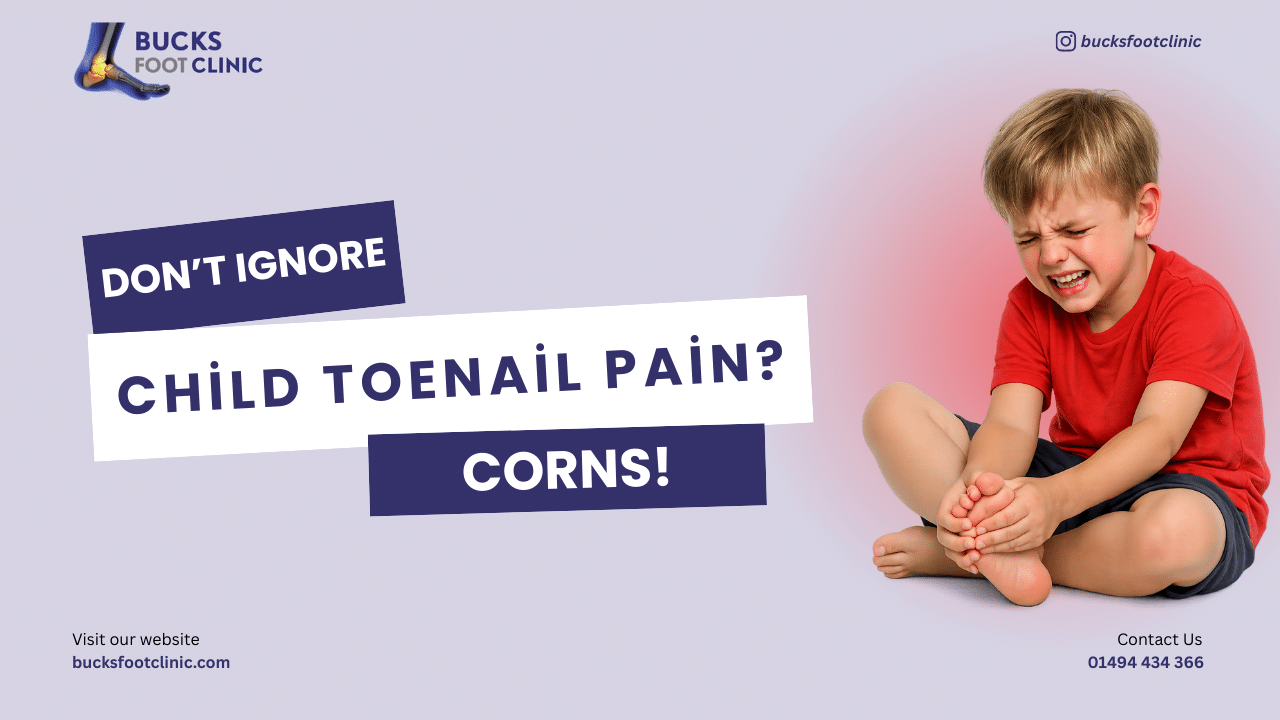
Child toenail pain or corns: Children’s feet are constantly growing and developing, making them vulnerable to various problems that parents might not immediately recognise as requiring professional attention. Toenail pain and corns in children are more common than many parents realise, and whilst some issues resolve naturally, others require professional assessment to prevent complications and ensure proper foot development.
Understanding when your child’s foot complaint warrants professional evaluation, recognising warning signs, and knowing how podiatrists can help ensures your child receives appropriate care when needed. At Bucks Foot Clinic, we provide gentle, child-friendly podiatry care for young patients. Contact us on 01494 434366 if your child is experiencing persistent foot or toenail problems.
Common Toenail Problems in Children
Ingrown toenails are surprisingly common in children and adolescents. Rapid growth, improper nail cutting, tight shoes (particularly trainers that children outgrow quickly), and genetic predisposition all contribute to ingrown toenail development. Children may not articulate their discomfort clearly, instead becoming reluctant to wear shoes, limping, or avoiding activities they previously enjoyed.
Trauma to toenails from sports, dropping objects, or stubbing toes can cause pain, bruising under the nail, or nail loss. Whilst many traumatic nail injuries heal without intervention, some require professional assessment to ensure no underlying bone injury exists. Fungal infections, though less common in children than adults, can develop, particularly in adolescents involved in sports requiring enclosed footwear.
Nail biting and picking at toenails creates irregular edges that can become ingrown or infected. Paronychia (infection around the nail) may develop from this habit or from minor injuries. Children with eczema or other skin conditions may be more prone to nail and surrounding skin problems.
Understanding Corns in Children
Corns are areas of thickened skin that develop in response to pressure or friction, typically on toe tops or between toes. In children, corns are less common than in adults but when present, they often indicate an underlying problem requiring attention.
Common causes in children include ill-fitting shoes (too tight, too loose, or too worn), hand-me-down shoes that don’t fit properly, biomechanical abnormalities affecting how the child walks, toe deformities such as hammer toes or overlapping toes, and foot structure issues causing abnormal pressure distribution. Unlike adults who may tolerate corns for extended periods, children often find them particularly painful and distressing.
It’s crucial to distinguish between corns and verrucae (plantar warts), as they require completely different treatments. Professional assessment ensures accurate diagnosis and appropriate treatment.
How to Prevent Foot Problems in Children
Proper footwear fitting is essential. Children’s feet grow rapidly check shoe fit every 2-3 months. Ensure approximately a thumb’s width between the longest toe and shoe end, adequate width preventing toe compression, and proper arch support. Avoid hand-me-down shoes, as they’re already moulded to another child’s foot shape and wear pattern.
Teach proper nail care early. Help younger children cut nails straight across, not curved, leaving them slightly longer than the toe tip. Supervise nail cutting until children demonstrate proper technique consistently. Address excessive moisture with breathable footwear and moisture-wicking socks, changing socks after sports or if feet become sweaty.
Encourage children to report foot discomfort promptly rather than ignoring or hiding problems. Regular foot checks as part of bath time routines allow early detection of issues. For active children involved in sports, ensure appropriate footwear for specific activities and replace sports shoes when worn.
If you notice any concerning changes or your child reports persistent discomfort, contact Bucks Foot Clinic on 01494 434366 for professional assessment.
Why Children’s Foot Problems Require Special Attention
Child toenail pain or corns: Children’s feet are not simply small adult feet they’re still developing, making proper assessment and treatment crucial. Untreated problems during growth years can lead to permanent structural changes, altered gait patterns affecting posture and joint development, chronic pain conditions, and avoidance of physical activity affecting overall health and development.
Children may not clearly communicate their symptoms, making parental observation and professional assessment particularly important. They might simply become less active, irritable, or reluctant to participate in activities they previously enjoyed rather than specifically complaining of foot pain.
Early intervention prevents minor problems from becoming established conditions. What might be a simple footwear adjustment or minor treatment now could require more extensive intervention if left unaddressed during continued growth and development.
When to Seek Professional Help
Several indicators suggest your child should see a podiatrist. Persistent limping or altered gait lasting more than a few days warrants professional assessment, even if your child can’t clearly describe pain. Visible signs of toenail problems including redness, swelling, pus discharge, bleeding, or visible nail embedded in skin require prompt evaluation.
Reluctance to wear shoes or participate in activities your child previously enjoyed may indicate foot discomfort they’re not articulating clearly. Recurring toenail or foot problems despite home care attempts suggest underlying issues requiring professional attention. Rapid changes in foot appearance including new lumps, bumps, or thickened skin areas should be assessed professionally.
Children with diabetes, immune system conditions, or neurological problems affecting feet require professional evaluation for any foot or toenail changes due to increased complication risks. Suspected corns or verrucae benefit from professional diagnosis, as accurate identification determines appropriate treatment.
What to Expect from Paediatric Podiatry
At Bucks Foot Clinic, we understand that children may feel anxious about medical appointments. Our approach focuses on making the experience as comfortable and positive as possible. Initial assessment involves discussing your child’s symptoms, observing how they walk, and gently examining the affected area. We explain everything in age-appropriate language, ensuring children understand what’s happening.
Treatment is tailored to the child’s age, maturity, and specific condition. For ingrown toenails, conservative management is often tried first, but if surgical intervention is needed, it’s performed with local anaesthetic ensuring comfort throughout. For corns, we identify and address the underlying cause whilst providing immediate relief. Children typically respond very well to treatment, with their youth and healing capacity working in their favour.
Parent education is an important component, with guidance on proper footwear selection, nail care techniques, and monitoring for recurrence. Follow-up appointments ensure problems are fully resolved and don’t recur during continued growth and development.
The Bottom Line
Child toenail pain or corns problems deserve prompt professional attention. What might seem like a minor complaint can indicate underlying issues affecting development, or might cause discomfort impacting your child’s activity levels and quality of life.
At Bucks Foot Clinic, we provide gentle, effective podiatry care for children of all ages. Our experienced practitioners understand how to work with young patients, making the experience as comfortable and positive as possible whilst ensuring proper diagnosis and treatment.
Don’t dismiss your child’s foot complaints or wait to see if problems resolve on their own. Early professional assessment prevents minor issues from becoming established problems. Contact Bucks Foot Clinic today on 01494 434366 to schedule your child’s consultation. Healthy feet are essential for active, happy childhoods, and we’re here to help ensure your child’s feet develop properly and remain problem-free.

Recent Comments