Itchy toenails are more common than most people expect, and the itch alone rarely tells you the cause. If you feel an itch under the toenail, around the nail edge or across the nail bed, you are dealing with a symptom, not a diagnosis. At Bucks Foot Clinic, our HCPC-registered podiatrists in Amersham and Gerrards Cross see itchy toenails every week. This guide explains the most common causes, what you can safely try at home, and the signs that mean you should book an appointment.
Why do my toenails itch?
The nail plate itself has no nerve endings, so the itch comes from the structures around it: the nail bed underneath, the skin at the sides and base of the nail, and the skin of the toe. Anything that irritates, inflames or infects those areas can make a toenail itch. Because several different conditions look alike, it pays to find the cause before you treat it.
Common causes of itchy toenails
Fungal nail infection (onychomycosis)
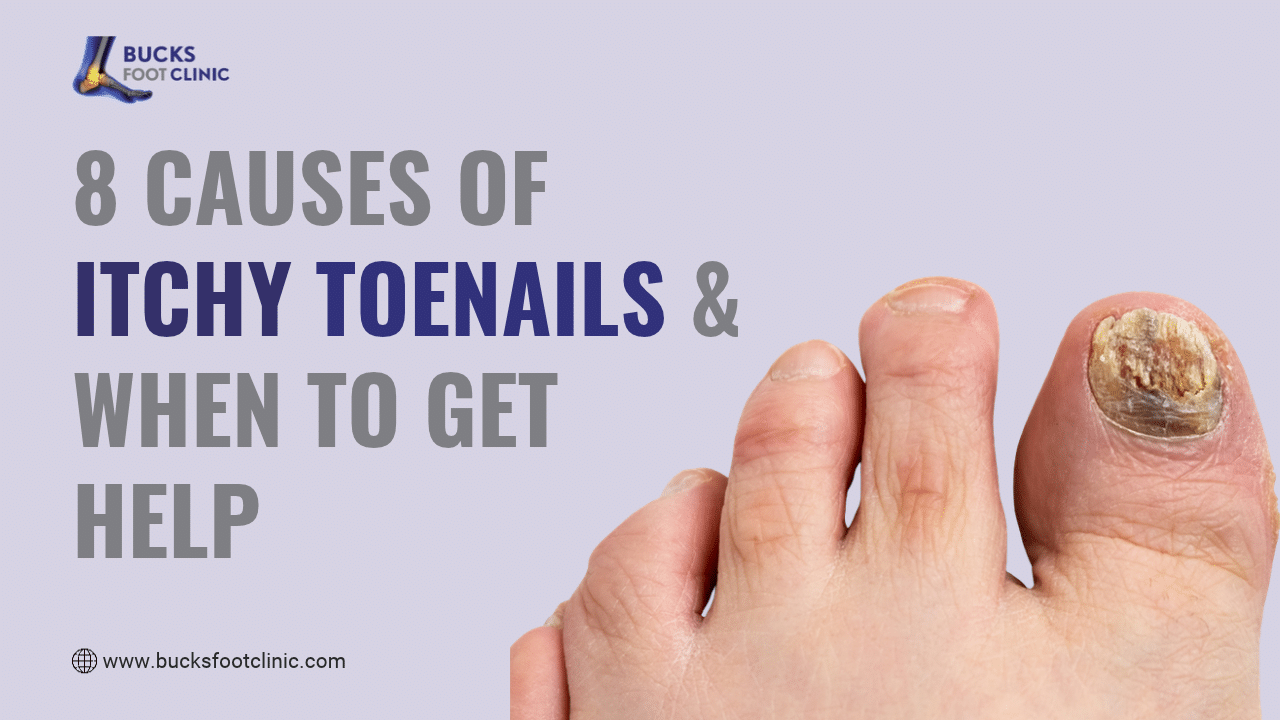
A fungal nail infection is one of the most frequent causes. The fungus feeds on keratin, the protein in your nail, and it often starts with an itch under the nail edge before the nail changes colour. Later signs include yellow, white or brown patches, thickening, crumbling and a musty smell. Our guide to understanding toenail fungus shows what each stage looks like. The NHS guide to fungal nail infections also lists the typical signs.
Athlete’s foot that has reached the nail
Athlete’s foot (tinea pedis) is a fungal skin infection that usually causes itching, peeling and soreness between the toes. It can spread to the skin around the toenail and then into the nail itself. If your toes itch as well as your nails, read our athlete’s foot treatment guide.
Dry skin, eczema and contact dermatitis
Dry or inflamed skin around the nail often itches, especially in winter or after hot baths. Contact dermatitis happens when your skin reacts to something it touches, such as nail polish, gel remover, a new sock fabric, shoe glue or a foot cream. The skin looks red, dry or flaky, and the itch usually settles once you remove the trigger.
Nail psoriasis
Nail psoriasis can cause small pits, ridges, thickening and a nail that lifts away from the nail bed. It can itch, and it looks very similar to a fungal infection. A podiatrist can tell the two apart. If we suspect psoriasis, we refer you to your GP or a dermatologist.
An ingrown or inflamed nail edge
A nail edge that digs into the skin can itch before it starts to hurt. Look for redness, mild swelling or tenderness along the side of the nail. Our articles on ingrown toenails versus paronychia and redness around the toenail explain how to tell the difference and when infection is likely.
Damp, tight or sweaty footwear
Warm, moist skin inside a closed shoe creates ideal conditions for fungus and irritation. Synthetic socks and shoes that you wear day after day make this worse.
A healing nail
After a knock, a stubbed toe or a bruised nail, the nail bed can itch as it heals. This itch is usually mild and fades as new nail grows.
Wider health conditions
Persistent itching in both feet, with no visible change in the nails or skin, sometimes links to a wider condition such as diabetes, thyroid problems, poor circulation, or kidney or liver conditions. If you have diabetes, take any new foot symptom seriously and read our diabetic foot care guide.
When to see a podiatrist about itchy toenails
Book an appointment if you notice any of the following:
- The itch lasts longer than two weeks.
- The nail changes colour, thickens, crumbles or lifts from the nail bed.
- Redness, swelling, pain, pus or a bad smell develops.
- The itch spreads to other nails or to the skin of your foot.
- You have diabetes, poor circulation or reduced feeling in your feet.
- You have tried an over-the-counter treatment and see no improvement.
Home care for itchy toenails
These steps suit most people while they wait for an appointment:
- Wash your feet daily and dry them thoroughly, especially between the toes.
- Change your socks every day. Choose cotton or moisture-wicking fibres and avoid tight synthetic pairs.
- Rotate your shoes so each pair has 24 hours to dry out.
- Moisturise the skin around the nail with a fragrance-free emollient. Keep it off the nail bed if you suspect fungus.
- Keep your nails short and cut them straight across.
- Resist scratching. Broken skin gives bacteria an easy way in.
- Leave off nail polish and artificial nails until you know the cause.
Avoid starting an antifungal treatment without a diagnosis. Many itchy toenails have nothing to do with fungus, and the wrong treatment costs you weeks.
How we diagnose and treat itchy toenails
At Bucks Foot Clinic, your podiatrist starts by listening to your history, then examines your nails, your skin and your footwear. If we suspect a fungal infection, we may take a small nail clipping for laboratory testing so that we treat the right problem. Depending on what we find, treatment can include nail debridement (carefully reducing thickened or damaged nail), advice on antifungal options, skin care guidance and footwear changes. We refer you to your GP or a dermatologist when we suspect a skin condition such as psoriasis or eczema.
Our podiatrists bring over 10 years of combined clinical experience, so you do not need to put up with the itch for long.
Book your appointment in Amersham or Gerrards Cross
Call us on 01494 304 849 (Amersham) or 01753 260 207 (Gerrards Cross), or book online at Bucks Foot Clinic. We offer same-week appointments, and our patients rate us five stars on Google.
Bucks Foot Clinic, Amersham: 18 Woodside Road, Amersham HP6 6AJ
Bucks Foot Clinic, Gerrards Cross: 14 Station Road, Gerrards Cross SL9 8EL
Frequently asked questions
Can itchy toenails mean a fungal infection?
Yes. Itching under the nail is an early sign of fungal infection, but it also appears with eczema, psoriasis, athlete’s foot and contact dermatitis. A podiatrist can confirm the cause.
Why does my big toenail itch?
Your big toe takes the most pressure from shoes, so friction, sweat and tight toe boxes irritate it more often. Fungus and ingrown edges also affect the big toe more than other toes. The same rules apply: look for nail changes, and see us if the itch lasts.
Are itchy toenails ever serious?
Usually not, but do not ignore it. If you have diabetes, poor circulation or reduced sensation, even a small skin change can lead to complications, so get it checked promptly. Redness, swelling, pus or pain also need prompt attention.
Should I put antifungal cream on itchy toenails?
Only if you know the cause. Creams treat skin infections such as athlete’s foot, but they rarely reach fungus under a thickened nail. If the problem is eczema or psoriasis, an antifungal will not help. Get a diagnosis first.
Why do itchy toenails feel worse at night?
At night you have fewer distractions, and the warmth of the bed can increase skin itch. Night-time itching does not point to one specific cause, so look at the whole picture: nail changes, skin changes and how long the itch has lasted.
How long should I wait before seeing a podiatrist?
If the itch has not settled within two weeks, or you notice any change in the nail, book an appointment.