Morton’s Neuroma Treatment in Amersham Near Gerrards Cross
If you’ve been experiencing a sharp, burning pain in the ball of your foot — or the odd sensation that there’s a pebble stuck inside your shoe — you may be dealing with Morton’s neuroma. At Bucks Foot Clinic, we provide specialist Morton’s neuroma treatment in Amersham near Gerrards Cross, helping patients across Buckinghamshire get back on their feet quickly, comfortably, and with confidence.
—
What Is Morton’s Neuroma?
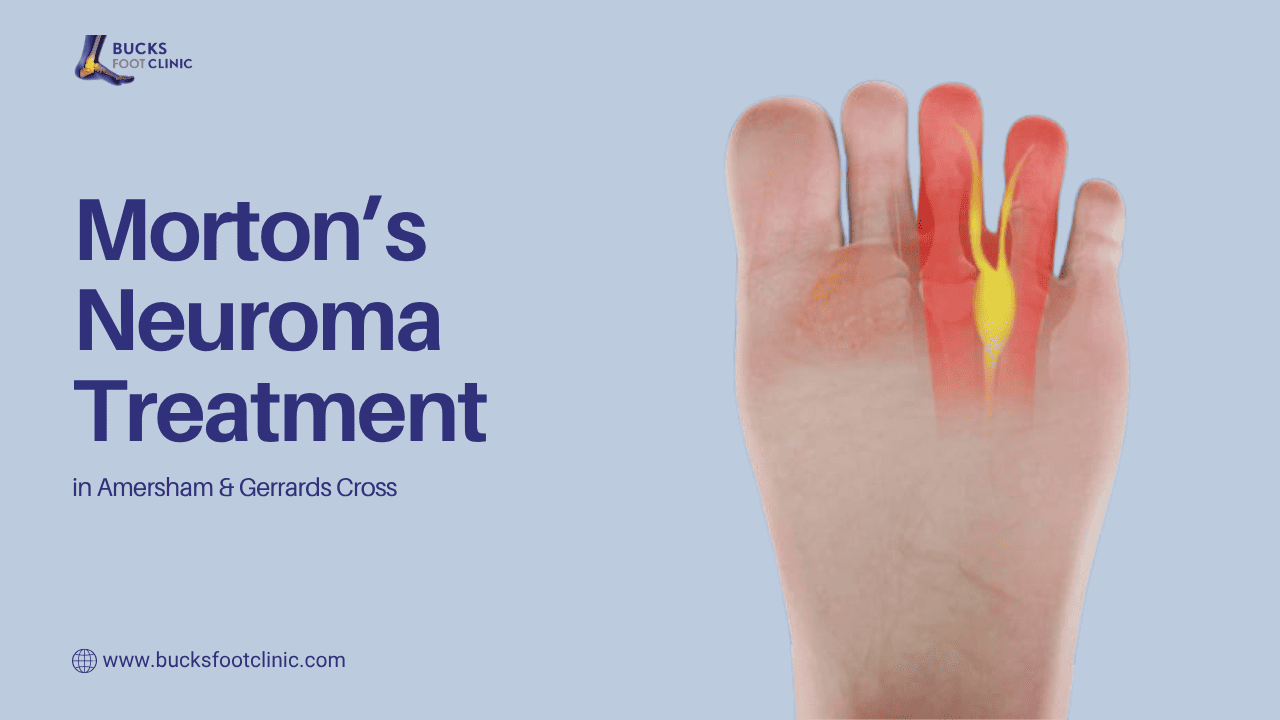
Morton’s neuroma is a thickening of the tissue surrounding one of the nerves that leads to your toes — most commonly between the third and fourth toes. The thickened nerve tissue causes irritation, pain, and inflammation that can make everyday walking feel genuinely miserable.
It isn’t a tumour, despite what the name might suggest. Think of it as a nerve that’s become compressed and irritated — often due to tight footwear, high heels, or repetitive pressure from sports and activity.
Common symptoms include:
– A burning or sharp pain in the ball of the foot
– Tingling or numbness in the toes
– The feeling of standing on a folded sock or small stone
– Pain that worsens when wearing narrow shoes or walking on hard surfaces
– Temporary relief when you remove your shoes and massage the area
Left untreated, Morton’s neuroma can become increasingly debilitating. The good news? With the right professional care, most people see significant improvement.
—
What Causes Morton’s Neuroma?
Morton’s neuroma rarely appears out of nowhere. Several factors can contribute to its development:
Footwear choices — Tight, narrow, or high-heeled shoes compress the toes and put excessive pressure on the forefoot. This is one of the most common triggers, particularly in women.
Foot structure — Flat feet (low or absent arches), high arches, bunions (a bony bump at the base of the big toe), or hammertoes (toes that curl downward) can all alter the way pressure is distributed across your foot.
High-impact activities — Running, racket sports, and other activities that place repeated stress on the ball of the foot can irritate the nerve over time.
Previous foot injuries — Trauma to the foot can increase the likelihood of nerve thickening developing in the affected area.
—
Home Management Tips for Morton’s Neuroma
While professional treatment is essential for lasting relief, there are some steps you can take at home to reduce discomfort in the short term.
Switch your footwear. Choose shoes with a wide toe box that gives your toes room to spread. Avoid heels higher than 2.5cm where possible. This single change can make a noticeable difference almost immediately.
Rest and reduce activity. If a particular sport or activity is aggravating your symptoms, give your foot a break. Continuing to push through the pain often makes the condition worse.
Use ice therapy. Apply an ice pack wrapped in a cloth to the affected area for 10–15 minutes at a time, a few times a day. This can help reduce inflammation and ease acute pain.
Try metatarsal pads. These small, cushioned pads sit just behind the ball of the foot and help redistribute pressure away from the irritated nerve. You can find them at most pharmacies.
Over-the-counter pain relief. Anti-inflammatory medications such as ibuprofen (if suitable for you) can help manage pain and swelling in the short term. Always follow the guidance on the packaging and consult your GP if you’re unsure.
These measures can provide temporary comfort — but they don’t address the underlying cause. If your symptoms persist beyond a few weeks, or if they’re interfering with your daily life, it’s time to see a podiatrist.
—
Professional Morton’s Neuroma Treatment at Bucks Foot Clinic
At Bucks Foot Clinic, our HCPC-registered podiatrists bring over 10 years of combined clinical experience to every consultation. We take a thorough, patient-centred approach — listening carefully to your symptoms and history before recommending the most appropriate treatment plan for you.
Treatment options we offer include:
Biomechanical assessment — We examine the way you walk and how pressure is distributed across your foot. This helps us identify any underlying structural issues contributing to your neuroma.
Custom orthotics (insoles) — Bespoke foot insoles designed to offload pressure from the affected nerve and correct biomechanical imbalances. These fit inside your everyday shoes and can dramatically reduce pain over time.
Padding and strapping — Targeted padding techniques to relieve pressure directly on the neuroma and support the surrounding structures.
Footwear advice — Practical, personalised guidance on the best shoes for your foot type and lifestyle — not just generic advice.
Shockwave therapy — A non-invasive treatment that uses sound wave energy to stimulate healing in the affected tissue. It’s particularly effective for stubborn, long-standing neuromas.
Corticosteroid injections — In cases where conservative treatments haven’t provided sufficient relief, a corticosteroid injection can reduce inflammation around the nerve and deliver significant pain reduction.
We always start with the most conservative, least invasive options and only escalate treatment if needed. Our goal is to get you comfortable and mobile as quickly as possible — without unnecessary procedures.
—
Why Choose Bucks Foot Clinic?
We understand that foot pain isn’t just a physical problem — it affects your mood, your independence, and your quality of life. Whether you’re a busy professional in Amersham, a runner in Gerrards Cross, or simply someone who wants to walk without wincing, we’re here to help.
Here’s what makes Bucks Foot Clinic the trusted choice for foot care across Buckinghamshire:
– ✅ HCPC-registered podiatrists with 10+ years of combined experience
– ✅ Same-week appointments available — no long NHS waiting lists
– ✅ Two convenient clinic locations in Amersham and Gerrards Cross
– ✅ 5-star Google reviews from patients across the local community
– ✅ Personalised, evidence-based treatment plans
– ✅ Warm, friendly clinical environment where you’re always heard
You’ll find us at two easily accessible locations:
📍 Bucks Foot Clinic — Amersham: 18 Woodside Road, Amersham, HP6 6AJ
📍 Bucks Foot Clinic — Gerrards Cross: 14 Station Road, Gerrards Cross, SL9 8EL
Visit our website at bucksfootclinic.com to learn more about our services and book your appointment online.
Ready to get help? Call us today on 01494 304 849 (Amersham) or 01753 260 207 (Gerrards Cross). Same-week appointments are available — don’t let foot pain hold you back any longer.
—
Frequently Asked Questions About Morton’s Neuroma
Can Morton’s neuroma go away on its own?
In mild cases, symptoms may ease with rest and better footwear. However, without addressing the underlying cause, the condition often returns or worsens. Professional assessment gives you the best chance of long-term relief.
How long does Morton’s neuroma treatment take?
This varies depending on the severity of your condition and the treatment approach. Many patients notice improvement within a few weeks of starting conservative treatment. More persistent cases may take longer and require a combination of therapies.
Do I need surgery for Morton’s neuroma?
Surgery is rarely the first step. The vast majority of patients respond well to conservative podiatric treatments such as orthotics, padding, and injections. Surgery is typically only considered when all other options have been exhausted.
Is Morton’s neuroma more common in women?
Yes — women are significantly more likely to develop Morton’s neuroma, largely due to the prevalence of narrow, high-heeled footwear. However, it can affect anyone, particularly those who are active or have certain foot structures.
How do I know if I have Morton’s neuroma or something else?
Several foot conditions can cause similar symptoms, including metatarsalgia (pain in the ball of the foot), stress fractures, and bursitis (inflammation of the fluid-filled sacs near joints). A podiatrist can carry out a thorough clinical assessment to confirm the diagnosis and rule out other causes.
Can I still exercise with Morton’s neuroma?
Depending on the severity, low-impact activities such as swimming or cycling may be manageable. High-impact sports that put pressure on the forefoot — such as running — are best avoided until your symptoms are under control. Your podiatrist will advise you on what’s appropriate for your specific situation.