Plantar Fasciitis Treatment in Amersham Near Gerrards Cross
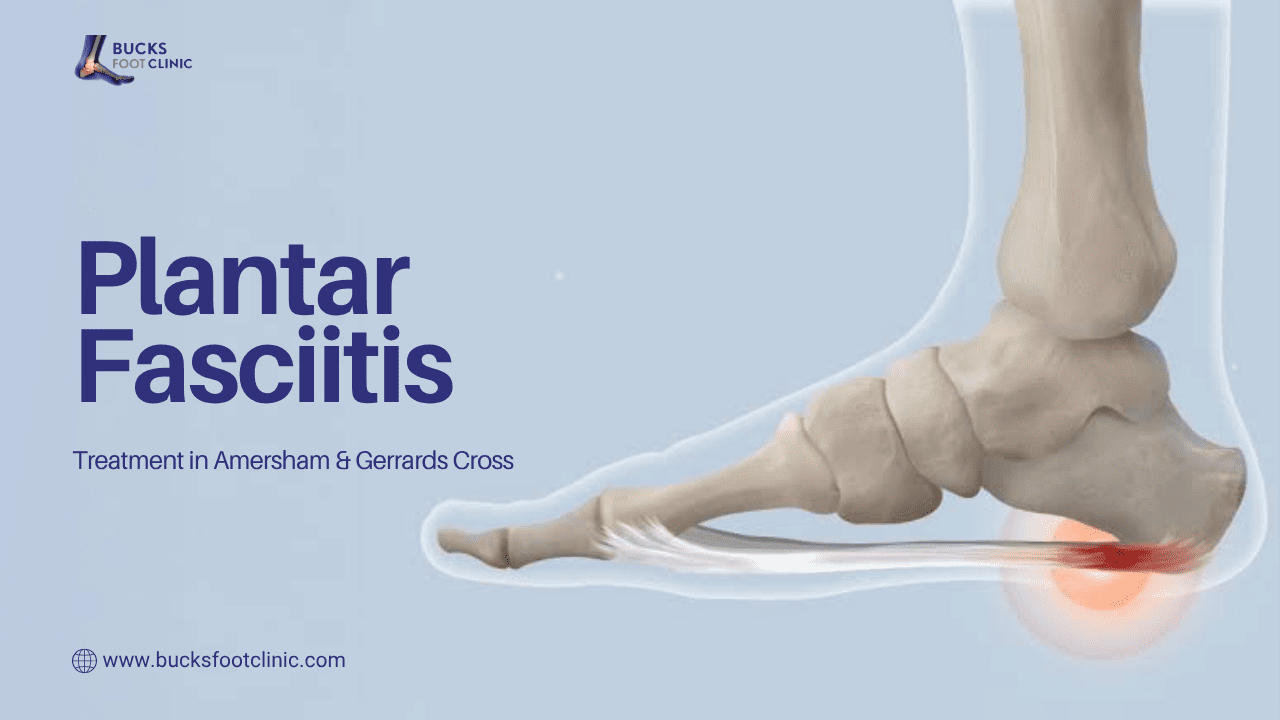
If you wake up each morning and take that first step out of bed only to feel a sharp, stabbing pain in your heel, you may be dealing with plantar fasciitis — inflammation of the plantar fascia, the thick band of tissue that runs along the bottom of your foot connecting your heel bone to your toes. It is one of the most common causes of heel pain we treat at Bucks Foot Clinic, and if you are searching for plantar fasciitis treatment in Amersham near Gerrards Cross, you have come to the right place. Our HCPC-registered podiatrists are here to help you get back on your feet — literally.
—
What Does Plantar Fasciitis Actually Feel Like?
Plantar fasciitis tends to produce a very specific type of pain. Most patients describe it as a stabbing or burning sensation at the base of the heel, worst in the morning or after long periods of sitting. The pain often eases slightly once you have been moving for a while, but it can return with a vengeance after extended standing or physical activity.
Some people also notice stiffness along the arch of the foot or swelling near the heel. Left untreated, plantar fasciitis can become a chronic condition that affects your daily routine, your work, and your ability to enjoy the activities you love.
—
What Causes Plantar Fasciitis?
Plantar fasciitis does not appear out of nowhere. Several factors can trigger or worsen the condition:
– **Overuse or sudden increases in activity** — Running, walking long distances, or standing for prolonged periods puts repeated stress on the plantar fascia.
– **Poor footwear** — Shoes without adequate arch support or cushioning fail to protect the foot properly.
– **Foot mechanics** — Flat feet (low arches), high arches, or an abnormal walking pattern can all place excessive strain on the fascia.
– **Weight** — Carrying extra body weight increases the load on the plantar fascia with every step.
– **Tight calf muscles or Achilles tendon** — Reduced flexibility in the lower leg increases tension on the heel.
– **Age** — Plantar fasciitis is most common in people between 40 and 60, though it affects people of all ages.
Understanding the root cause is essential to choosing the right treatment — and that is exactly what our podiatrists do at every appointment.
—
Home Remedies That Can Help in the Short Term
While professional treatment is the most effective route to recovery, there are steps you can take at home to manage your symptoms while you wait for your appointment.
**Stretch your calf and foot regularly.** Tight calf muscles contribute significantly to plantar fasciitis. Try a simple calf stretch against a wall — keep your back leg straight and press your heel firmly to the floor. Hold for 30 seconds and repeat three times on each side.
**Roll a frozen water bottle under your foot.** This combines gentle massage with cold therapy (cryotherapy) to reduce inflammation and ease discomfort. Do this for 10–15 minutes, especially after activity.
**Rest and reduce high-impact activity.** Temporarily swapping running or long walks for swimming or cycling takes pressure off the fascia and gives it a chance to heal.
**Wear supportive footwear at all times.** Avoid walking barefoot, especially on hard floors. Supportive trainers or sandals with a firm arch support make a noticeable difference.
**Over-the-counter anti-inflammatory medication** such as ibuprofen can reduce pain and swelling short term — but always check with your GP or pharmacist first, particularly if you have any existing health conditions.
These measures can offer temporary relief, but they rarely resolve plantar fasciitis on their own. Without addressing the underlying cause, the pain tends to return.
—
Professional Plantar Fasciitis Treatment at Bucks Foot Clinic
At Bucks Foot Clinic, we take a thorough, evidence-based approach to treating plantar fasciitis. Our HCPC-registered podiatrists with over 10 years of combined clinical experience will assess your foot mechanics, gait, footwear, and lifestyle to identify exactly what is driving your pain — then build a personalised treatment plan around you.
Here is what professional treatment at our clinic can include:
**Biomechanical Assessment** — We analyse how you walk and stand, identifying any abnormalities in your gait (the way you move) that may be causing excess strain on the plantar fascia.
**Custom Orthotics** — These are specially made insoles fitted to your feet that correct your foot mechanics, redistribute pressure, and support the arch. Unlike off-the-shelf insoles, custom orthotics address your specific needs.
**Stretching and Exercise Programmes** — We prescribe targeted stretching and strengthening exercises tailored to your condition, helping you build long-term resilience in the foot and lower leg.
**Strapping and Taping** — Specialist podiatric taping techniques can offload the plantar fascia, providing immediate pain relief and allowing the tissue to heal more effectively.
**Footwear Advice** — We guide you on the right type of footwear for your foot type and activity level — a simple change that can make a significant difference.
**Shockwave Therapy** — For persistent cases of plantar fasciitis, we offer extracorporeal shockwave therapy (ESWT), a non-invasive treatment that uses sound wave energy to stimulate healing in the damaged tissue. It is clinically proven and highly effective for chronic heel pain.
—
Serving Patients Across Amersham and Gerrards Cross
We understand that heel pain does not wait for a convenient time. That is why we offer same-week appointments at both of our local clinics — making it easy for patients across Amersham, Gerrards Cross, and the surrounding areas to get the care they need quickly.
Our Amersham clinic is located at **18 Woodside Road, Amersham, HP6 6AJ** — easily accessible for residents across the Chilterns area. Our Gerrards Cross clinic sits at **14 Station Road, Gerrards Cross, SL9 8EL**, conveniently placed for commuters and local residents alike.
Both clinics are welcoming, relaxed environments where you will always be seen by a qualified, experienced podiatrist — not a generalist. We pride ourselves on our 5-star Google reviews and the trust our patients place in us.
—
Why Choose Bucks Foot Clinic?
There are plenty of clinics you could visit, but here is why patients across Amersham and Gerrards Cross consistently choose us:
– ✅ **HCPC-registered podiatrists** — fully qualified and regulated
– ✅ **10+ years of combined clinical experience**
– ✅ **Same-week appointments available**
– ✅ **Personalised treatment plans** — not a one-size-fits-all approach
– ✅ **Advanced treatment options** including shockwave therapy
– ✅ **5-star Google reviews** from patients across Buckinghamshire
– ✅ **Two convenient local clinics** in Amersham and Gerrards Cross
We genuinely care about getting you better. Whether you have had heel pain for a week or two years, we will listen, assess, and treat you with the expertise and compassion you deserve.
—
Frequently Asked Questions About Plantar Fasciitis
**Q: How long does plantar fasciitis take to heal?**
A: With the right treatment, many patients see significant improvement within 6–8 weeks. However, without addressing the root cause, symptoms can persist for months or even years. Early professional intervention makes a real difference to recovery time.
**Q: Can I still exercise with plantar fasciitis?**
A: Yes, but you need to choose low-impact activities such as swimming or cycling while you recover. Our podiatrists will advise you on what is safe for your specific situation.
**Q: Are custom orthotics worth it for plantar fasciitis?**
A: For many patients, custom orthotics are one of the most effective long-term solutions. They correct the biomechanical issues driving the condition rather than just masking the pain.
**Q: Do I need a GP referral to see a podiatrist at Bucks Foot Clinic?**
A: No. You can book directly with us — no GP referral needed. Simply call us or visit our website to arrange your appointment.
**Q: Is plantar fasciitis the same as a heel spur?**
A: Not exactly. A heel spur is a bony growth on the heel bone that can develop alongside plantar fasciitis, but the two are separate conditions. Many people with plantar fasciitis do not have a heel spur, and many heel spurs cause no pain at all. Our podiatrists will assess your heel thoroughly to give you an accurate diagnosis.
—
Ready to get help? Do not let heel pain hold you back any longer. Contact Bucks Foot Clinic today to book your appointment — same-week slots are available at both our Amersham and Gerrards Cross clinics.
📞 **Amersham:** 01494 304 849 | **Gerrards Cross:** 01753 260 207
🌐 Visit us at [bucksfootclinic.com](https://bucksfootclinic.com/) to learn more or book online.