Ingrown Toenail Treatment in Old Amersham: When Home Care Isn’t Enough
An ingrown toenail rarely stays a minor problem for long. Ingrown toenail treatment in Old Amersham is something we see at every stage — from the first twinge of tenderness to nails that have become swollen, infected, and genuinely painful to walk on. If you’ve been soaking, trimming, and hoping it settles down on its own, it’s worth understanding why that approach so often fails, and what actually works instead.
What Causes an Ingrown Toenail?
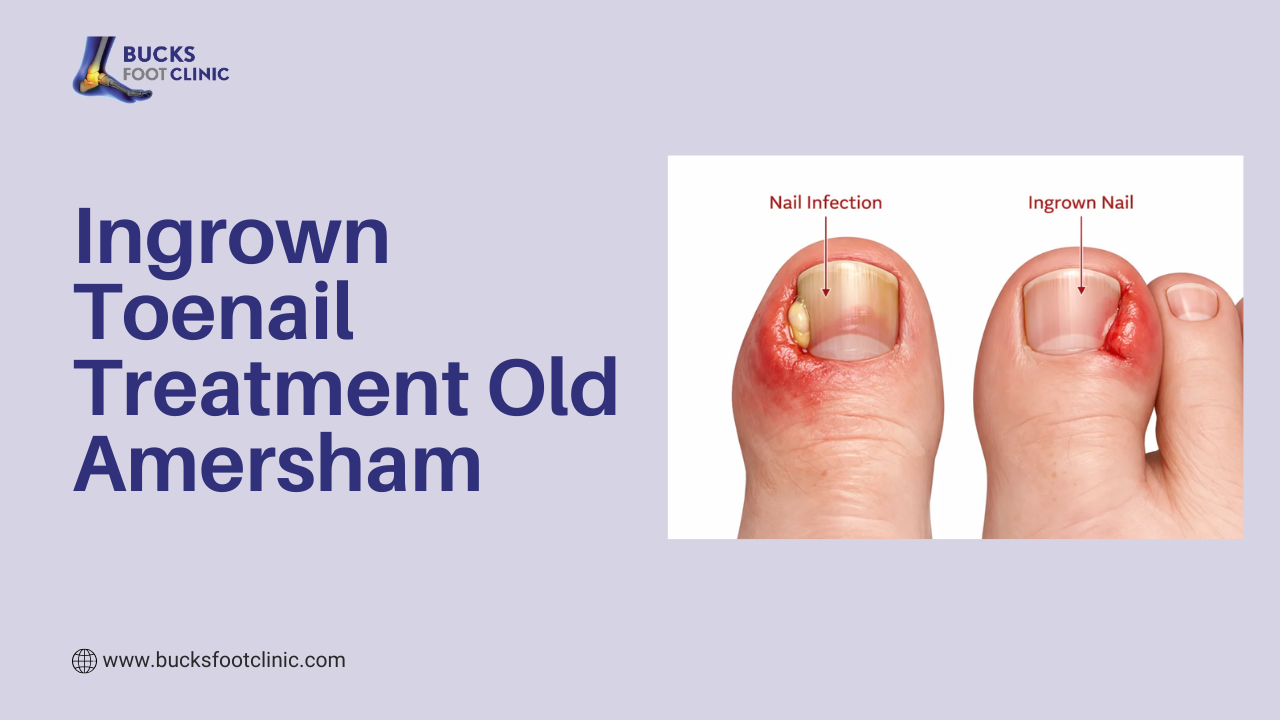
An ingrown toenail develops when the edge or corner of the nail grows into the surrounding skin instead of over it. The skin becomes inflamed, tender, and often infected as the nail continues to press into it with every step.
Common causes include:
- Cutting nails too short, or rounding the corners instead of trimming straight across
- Tight shoes that squeeze the toes together
- An injury to the toe, such as stubbing it or dropping something on it
- A naturally curved nail shape, which runs in families
- Sweaty feet or poor hygiene, which softens the skin around the nail
- Sports that put repeated pressure on the toes, such as football or running
You don’t have to put up with foot pain or discomfort. Our experienced team is here to help. Expert foot care is just a call away. Contact Bucks Foot Clinic today at 01494 304 849 / 01753 260 207 to book your appointment, or visit bucksfootclinic.com. We have clinics in Gerrards Cross, Amersham, and Old Amersham.
How to Prevent Ingrown Toenails
Most ingrown toenails are preventable with a few simple habits.
- Trim nails straight across, level with the top of the toe — never into the corners.
- Choose shoes with a wide toe box that doesn’t crowd your toes.
- Change socks daily and keep feet dry, particularly between the toes.
- Avoid picking at the sides of the nail, which can tear the skin and let infection in.
- If you have diabetes or poor circulation, check your feet daily rather than waiting for pain to appear.
- Wear protective, properly fitted footwear during sport.
Why Home Treatment Often Makes Things Worse
Soaking the foot in warm water and trying to lift or trim the ingrown edge feels productive, but it rarely solves the underlying problem. Here’s why: once the nail edge has pushed into the skin, that tissue is already inflamed and often infected. Cutting at the nail yourself — especially digging down into the corner — frequently makes the ingrowth worse rather than better, and can introduce further infection.
A podiatrist looks at the whole picture: how far the nail has grown in, whether there’s active infection, and whether the shape of the nail means this will simply keep happening. That assessment is the difference between a quick fix that lasts and a cycle of pain that returns every few months.
For professional advice before the problem worsens, Contact Bucks Foot Clinic
How We Treat Ingrown Toenails at Our Old Amersham Clinic
At Bucks Foot Clinic, our HCPC-registered podiatrists — with 10+ years of combined experience between them — treat ingrown toenails at every stage, from early discomfort through to established, recurring cases.
For a toenail caught early, conservative treatment is often enough: we carefully lift and trim the offending edge, remove any trapped debris, and show you how to care for it as it grows out.
For a nail that keeps coming back, minor nail surgery is usually the more lasting solution. Performed under local anaesthetic at our Old Amersham clinic, this involves removing the problem edge of the nail and treating the nail bed so it doesn’t regrow in the same place. It’s a quick, well-tolerated procedure, and most patients are surprised by how little discomfort there is afterwards.
Same-week appointments are available for patients in genuine pain, because an infected ingrown toenail isn’t something that benefits from waiting.
Frequently Asked Questions
Q1. Will nail surgery hurt?
No. The toe is fully numbed with local anaesthetic before we begin, so you’ll feel pressure but not pain during the procedure itself.
Q2. How long is the recovery?
Most patients are back to normal footwear and activity within one to two weeks. The area is usually fully healed within four to six weeks, and we’ll give you clear aftercare advice to support that.
Q3. Will my ingrown toenail come back after treatment?
After minor nail surgery, recurrence is uncommon — generally under 5%. Good nail-cutting habits and well-fitted shoes keep the odds in your favour long term.
Q4. Can I still wear normal shoes afterwards?
Yes, once the initial healing is complete. We’ll advise on footwear during recovery and recommend a wide toe box going forward to reduce the risk of it happening again.
Q5. Should I see a podiatrist or my GP first?
Either is a reasonable starting point, but a podiatrist can usually assess, treat, and — if needed — perform nail surgery in the same visit, without a referral.
Book Your Ingrown Toenail Treatment in Old Amersham
An ingrown toenail that’s painful, red, or weeping rarely improves with more home treatment. The longer it’s left, the more likely it is to need surgery rather than a simple trim.
If you’re also experiencing discomfort around the heel, you can read our related Heel Pain in Old Amersham information for further guidance.
Call Bucks Foot Clinic on 01494 304 849 to book your assessment at our Old Amersham clinic, Rectory Meadow Surgery, School Lane, HP7 0HG. We also offer diabetic foot care at our Gerrards Cross clinic at 14 Station Road, SL9 8EL. You can call the Gerrards Cross clinic on 01753 260 207. Visit bucksfootclinic.com to book online.