Morton’s Neuroma: Why It Feels Like You’re Walking on a Pebble
You reach down and check your shoe, but there’s nothing there. No stone, no bunched-up sock, no crease in the insole. Yet every time you take a step, it feels exactly like something hard is pressing into the ball of your foot. If this sensation is accompanied by burning pain, tingling, or numbness between your toes, you may be experiencing Morton’s neuroma a condition that’s more common than you might think and responds well to professional Morton’s neuroma treatment.
What Is Morton’s Neuroma?
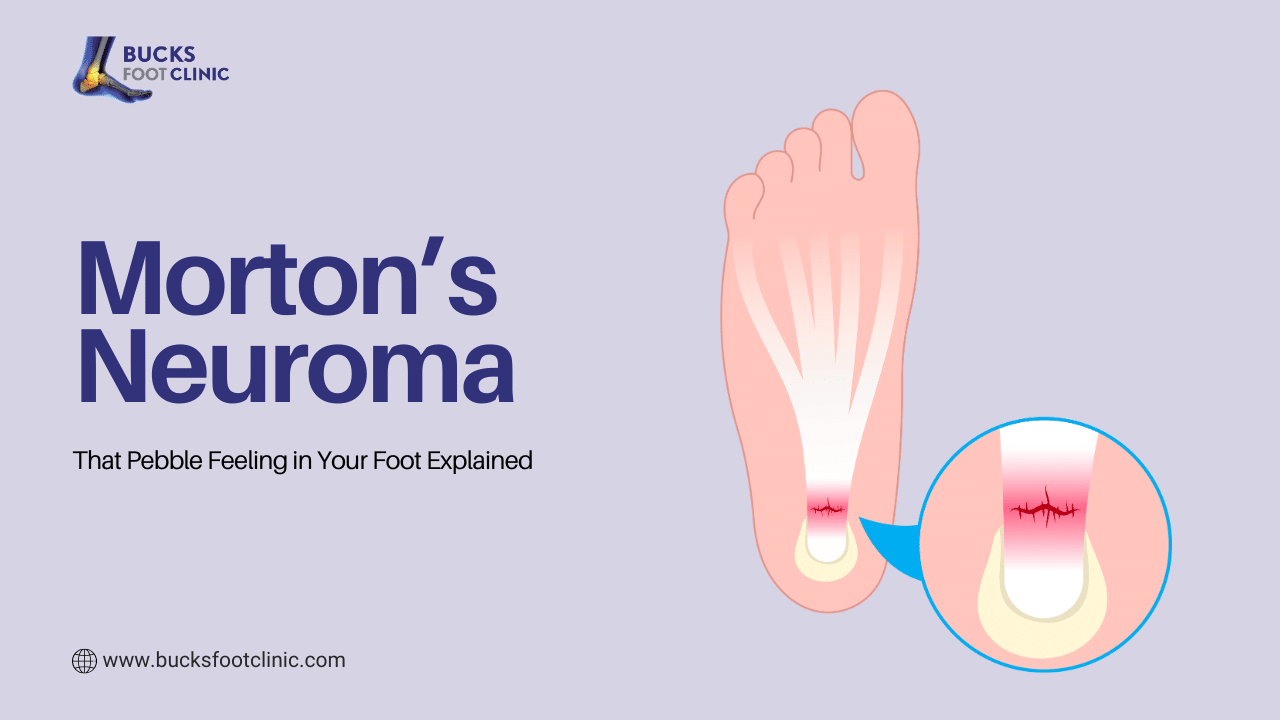
Despite the name, Morton’s neuroma isn’t actually a tumour. It’s a thickening of the tissue surrounding one of the nerves leading to your toes, most commonly the nerve between the third and fourth toes. This thickened tissue compresses the nerve, causing pain, burning, tingling, and that characteristic feeling of standing on a pebble or having a fold in your sock.
Morton’s neuroma is one of the three most common foot disorders alongside plantar fasciitis and bunions, yet it receives far less attention. Many people suffer for months before seeking help, often assuming the problem will resolve on its own.
Struggling with this problem? Call Bucks Foot Clinic on 01494 304 849 or book online at bucksfootclinic.com for expert advice and treatment.
Who Gets Morton’s Neuroma?
Women are affected significantly more often than men, largely due to footwear choices. High heels and narrow-toed shoes compress the forefoot, increasing pressure on the nerves between the toes. Runners and people who participate in high-impact sports are also at higher risk due to repetitive forefoot loading. Foot deformities like bunions, hammertoes, and flat feet can alter forefoot mechanics in ways that increase nerve compression.
How to Prevent Morton’s Neuroma
Wear shoes with a wide toe box that allows your toes to spread naturally
Avoid high heels and pointed shoes for prolonged wear
Use cushioned insoles to reduce pressure on the ball of the foot
If you run or exercise regularly, ensure your shoes provide adequate forefoot support
Address any underlying foot conditions like bunions or hammertoes that alter forefoot pressure
Maintain foot strength with regular exercises targeting the intrinsic muscles
Why Self-Treatment Has Limits
Wider shoes and cushioned insoles can provide relief for mild cases, but they can’t address the nerve thickening that has already occurred. Many people try padding, different shoes, and rest without success because the condition has progressed beyond what simple self-care can resolve. A podiatrist can assess the severity of your neuroma and offer targeted treatments that address the compression directly.
How Bucks Foot Clinic Treats Morton’s Neuroma
Thorough assessment to confirm the diagnosis and rule out other causes of forefoot pain (stress fractures, metatarsalgia, capsulitis)
Bespoke orthotics with metatarsal domes or pads designed to spread the metatarsal bones apart, reducing compression on the affected nerve
Footwear recommendations tailored to your lifestyle and activities
Advice on activity modification to reduce aggravating movements
Referral for further interventions (such as steroid injections or surgical consultation) if conservative treatment doesn’t provide sufficient relief
That pebble feeling isn’t going away on its own. Contact Bucks Foot Clinic today on 01494 304 849 to book your appointment, or visit bucksfootclinic.com. We have clinics in Amersham, Chesham, and Little Chalfont.