Verruca Treatment in Old Amersham: A Podiatrist’s Guide to Swift Microwave Therapy
If you’ve been dealing with a verruca for months and it still hasn’t shifted, you’re not alone. Verruca treatment in Old Amersham is one of the most common reasons patients walk through our door at Bucks Foot Clinic, usually after weeks of over-the-counter gels and home remedies that haven’t worked. A stubborn verruca is very treatable once you understand what actually clears it — and what doesn’t.
What Is a Verruca, and Why Won’t It Go Away?
A verruca is a small, rough growth on the skin caused by the human papillomavirus, or HPV (a common virus that enters through tiny breaks in the skin). It usually appears on the sole or side of the foot. Because the sole bears your body weight, the verruca gets pushed inward rather than outward, which is why it often looks flatter than a wart elsewhere on the body and can feel like standing on a small stone with every step.
The virus lives in the deeper layers of skin, not just on the surface. That’s the problem with most shop-bought treatments: they only ever reach the top layer. The infection underneath survives, the verruca returns within weeks, and months go by with no real progress.
You don’t have to put up with foot pain or discomfort. Our experienced team is here to help. Expert foot care is just a call away. Contact Bucks Foot Clinic today at 01494 304 849 / 01753 260 207 to book your appointment, or visit bucksfootclinic.com. We have clinics in Gerrards Cross, Amersham, and Old Amersham.
How to Prevent Verrucas From Spreading
Prevention matters just as much as treatment — both to stop a verruca appearing in the first place, and to stop one you already have from spreading to other toes or to someone else in your household.
- Wear flip-flops or pool shoes in communal showers, swimming pools, and changing rooms.
- Keep feet dry, since the virus thrives in warm, damp conditions.
- Don’t share towels, socks, or shoes with someone who has a verruca.
- Cover an existing verruca with a waterproof plaster before swimming.
- Avoid picking or scratching at the verruca, which spreads live virus to nearby skin.
- Check children’s feet regularly, as verrucas are especially common in school-age kids after swimming lessons and PE.
Why a Podiatrist Beats Home Remedies
Duct tape, apple cider vinegar, and pharmacy freeze sprays are the three home remedies we hear about most. A few patients get lucky. Most don’t, and there’s a clear reason why.
Salicylic acid gels work by slowly dissolving the top layer of skin, but they need daily application for months and rarely reach deep enough to affect the virus itself. Over-the-counter freezing kits don’t get cold enough to destroy infected tissue the way clinical cryotherapy does. And picking at a verruca, however tempting when it’s uncomfortable, simply spreads the virus to healthy skin nearby.
A podiatrist takes a fundamentally different approach. Rather than treating what’s visible on the surface, professional treatment targets the infected tissue directly. With Swift therapy specifically, it also triggers your own immune system to finish the job from the inside. That distinction matters most for anyone who has already spent months on remedies that led nowhere.
For professional advice before the problem worsens, Contact Bucks Foot Clinic
How We Treat Verrucas at Our Old Amersham Clinic
At Bucks Foot Clinic‘s Old Amersham clinic, based inside Rectory Meadow Surgery on School Lane, we offer Swift microwave therapy — an advanced treatment few local clinics have access to.
Swift uses controlled microwave energy delivered through a small probe placed directly on the verruca. The energy heats the infected tissue and triggers an immune response, so your body starts recognising and clearing the virus on its own. Most patients need three sessions, spaced roughly four weeks apart, and each session takes only a few minutes in the chair.
There’s no cutting, no open wound, and no time off your feet afterwards. You can walk straight out of the clinic and get on with your day.
Before recommending Swift, one of our HCPC-registered podiatrists — our team brings 10+ years of combined experience — will examine the verruca in person to confirm it’s suitable and rule out anything else it could be, since not every mark on the sole of the foot is a verruca.
Frequently Asked Questions
Q1. Does Swift microwave therapy hurt?
Most patients describe a brief, warm sensation during treatment rather than pain. Each verruca is treated in a minute or two.
Q2. How many sessions will I need?
Most verrucas clear within three sessions, spaced four weeks apart. Larger or long-standing verrucas occasionally need a fourth.
Q3. Can children have Swift therapy?
Yes, Swift suits most children. We’ll always talk through the options at the assessment and choose whichever treatment fits your child best.
Q4. Will the verruca come back after treatment?
Because Swift works with your immune system rather than simply removing surface tissue, recurrence rates are low. Good prevention habits afterwards keep the odds firmly in your favour.
Q5. Is verruca treatment available on the NHS?
NHS podiatry rarely treats verrucas unless there’s a specific medical reason, so most patients in Old Amersham book privately for faster access to treatment such as Swift.
Book Your Verruca Treatment in Old Amersham
A verruca that hasn’t responded to home treatment after a few weeks is unlikely to clear on its own. The sooner a podiatrist sees it, the sooner it stops spreading — and the sooner it’s gone for good.
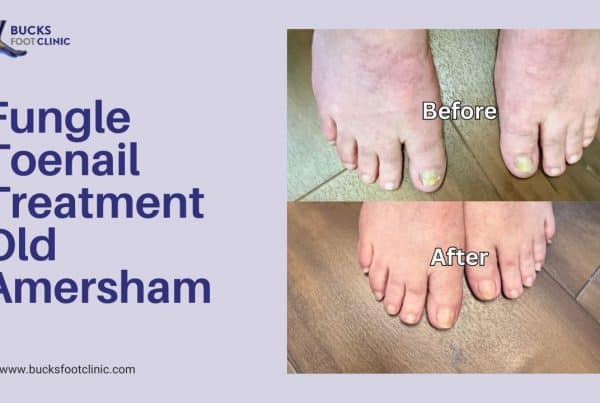
For related foot care information, you can also read our Fungal Toenail Treatment in Old Amersham guide or visit our Old Amersham clinic page.
Call Bucks Foot Clinic on 01494 304 849 to book your assessment at our Old Amersham clinic, Rectory Meadow Surgery, School Lane, HP7 0HG. We also offer diabetic foot care at our Gerrards Cross clinic at 14 Station Road, SL9 8EL. You can call the Gerrards Cross clinic on 01753 260 207. Visit bucksfootclinic.com to find out more or book your appointment online.