Fungal Toenail Treatment in Old Amersham: What Actually Clears Nail Fungus
Yellow, thickened, or crumbling toenails are more than a cosmetic worry — they’re a sign of infection that, left alone, tends to spread rather than fade. Fungal toenail treatment in Old Amersham is something we treat every week at Bucks Foot Clinic, usually after patients have already tried a pharmacy nail paint or two without much change. Here’s why that happens, and what actually works.
What Causes a Fungal Toenail Infection?
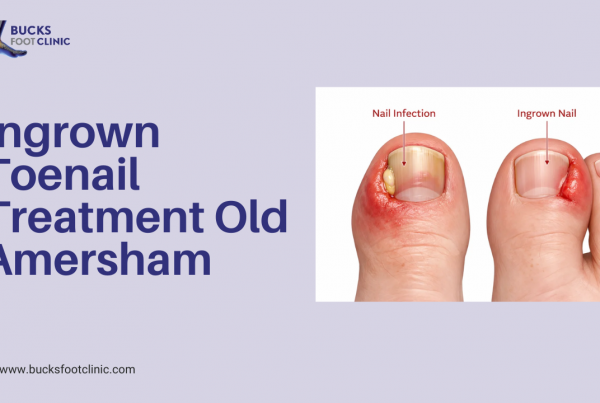
Fungal nail infection, known medically as onychomycosis, happens when microscopic fungi get into the nail bed and nail plate, feeding on the keratin that makes up the nail itself. Once established, the infection spreads slowly but steadily deeper into the nail.
You’re more likely to develop a fungal nail infection if you:
- Walk barefoot in communal areas like pools, gyms, or changing rooms
- Have diabetes or reduced circulation
- Are over 60, since nail growth slows with age
- Wear tight shoes or nail polish that traps moisture against the nail
- Have had a previous nail injury
- Use nail salon tools that haven’t been properly sterilised
You don’t have to put up with foot pain or discomfort. Our experienced team is here to help. Expert foot care is just a call away. Contact Bucks Foot Clinic today at 01494 304 849 / 01753 260 207 to book your appointment, or visit bucksfootclinic.com. We have clinics in Gerrards Cross, Amersham, and Old Amersham.
How to Prevent Fungal Toenail Infections
A few consistent habits make a real difference to your risk.
- Wear shower shoes in communal pools, gyms, and changing rooms.
- Keep feet dry, particularly between the toes, after washing or swimming.
- Trim nails straight across and keep them at a manageable length.
- Choose breathable footwear and rotate shoes so they can dry out between wears.
- Ask your nail salon how they sterilise tools, or bring your own.
- Avoid gel polish or artificial nails while you have an active infection, since they trap moisture.
Why Home Remedies So Often Fail
Tea tree oil, vinegar soaks, and vapour rub are popular home treatments, but they very rarely clear a fungal nail infection on their own. The fungus lives deep within the nail plate, not just on the surface, so topical remedies applied to the outside struggle to reach it in any meaningful concentration.
There’s also the matter of time. Nails grow slowly — a full toenail can take twelve to eighteen months to replace itself — so any treatment needs to work consistently over that entire period to succeed. Most home remedies simply aren’t strong enough, or aren’t used for long enough, to outlast the infection.
Oral antifungal medication from a GP can be effective but needs monitoring and isn’t suitable for everyone, particularly those on other medications. Professional podiatry offers a more direct route: removing infected nail tissue, applying targeted antifungal treatment, and following up regularly to track progress.
For professional advice before the problem worsens, Contact Bucks Foot Clinic
How We Treat Fungal Toenails at Our Old Amersham Clinic
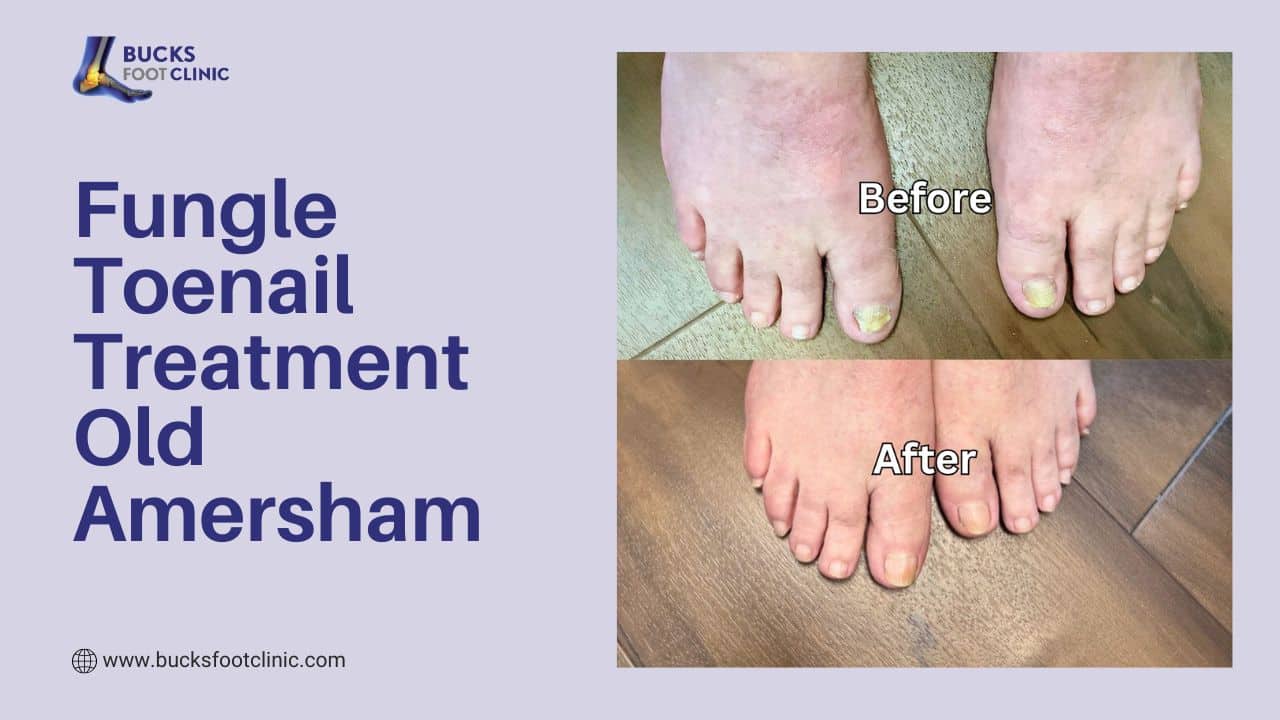
Our HCPC-registered podiatrists, with 10+ years of combined experience, begin with a proper assessment — examining the nail under magnification and, where needed, taking a sample to confirm the specific fungus involved, since not every discoloured nail is actually a fungal infection.
Treatment usually combines nail debridement (carefully thinning and removing the infected portions of the nail, which is painless since nails have no nerve supply) with prescription-strength antifungal treatment applied directly to the nail bed. We then see you for regular follow-up appointments to remove newly infected nail as it grows and keep the infection from re-establishing itself.
Frequently Asked Questions
Q1. How long does it take to clear a fungal toenail?
Because nails grow so slowly, full clearance usually takes six to twelve months, though you should see visible improvement within the first two to three months of consistent treatment.
Q2. Is nail debridement painful?
No. Nails don’t have a nerve supply, so you’ll feel gentle pressure or vibration during debridement, but no pain.
Q3. Will the infection come back?
With completed treatment and good prevention habits — dry feet, breathable shoes, and sterile nail tools — recurrence is uncommon.
Q4. Can I wear nail polish during treatment?
We’d recommend avoiding polish, particularly gel polish, while treatment is ongoing, since it traps moisture and can hide early signs of reinfection. Once the nail is clear, normal polish is fine.
Q5. Do I need a referral from my GP?
No. You can book directly with us for an assessment and treatment, without needing to see your GP first.
Book Your Fungal Toenail Treatment in Old Amersham
A fungal nail infection rarely improves on its own, and the longer it’s left, the longer treatment tends to take. Catching it early makes a genuine difference.
For related foot care information, you can also read our Verruca Treatment in Old Amersham guide or visit our Old Amersham clinic page.
Call Bucks Foot Clinic on 01494 304 849 to book your assessment at our Old Amersham clinic, Rectory Meadow Surgery, School Lane, HP7 0HG. We also offer diabetic foot care at our Gerrards Cross clinic at 14 Station Road, SL9 8EL. You can call the Gerrards Cross clinic on 01753 260 207. Book your appointment online with Bucks Foot Clinic.