Fungal Toenail Treatment That Actually Works: A Gerrards Cross Podiatrist’s Guide
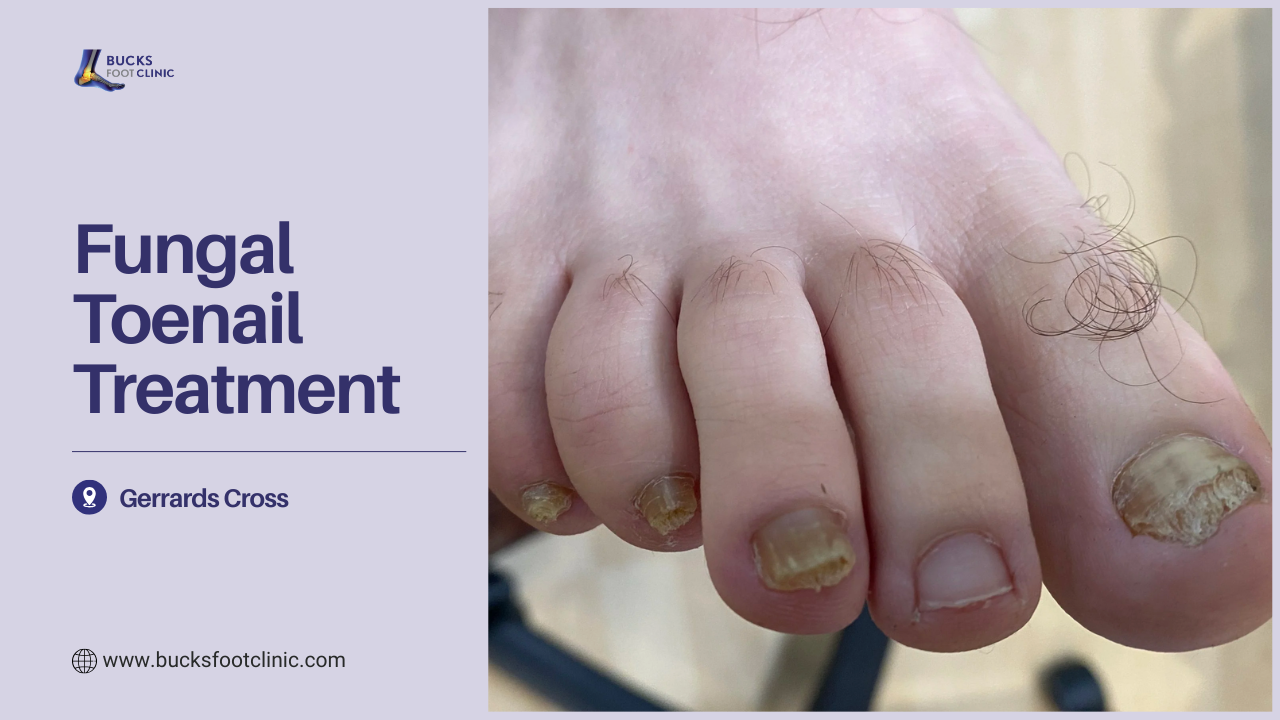
Fungal toenail infections are stubborn. Your nails become yellowed, thick, crumbly, or discoloured, and simple home remedies rarely work. Many people give up, hiding their feet or struggling with pain and embarrassment. But there is good news: professional treatment at Bucks Foot Clinic in Gerrards Cross offers proven solutions that actually clear fungal infections. This guide explains what causes nail fungus, why DIY treatments fail, and how our HCPC-registered podiatrists can help restore healthy nails.
What Causes Fungal Toenail Infections?
Fungal toenail infections (onychomycosis) occur when microscopic fungi—typically dermatophytes—invade the nail bed and nail plate. The fungus lives in the keratin that makes up your nail, feeding on it and spreading deeper over time.
You’re more likely to develop fungal nails if you:
- Walk barefoot in communal areas like changing rooms, pools, or saunas
- Have poor circulation or diabetes
- Are over 60 years old
- Have a weakened immune system
- Wear tight shoes or occlusive nail polish
- Have had a nail injury
- Use communal nail salon equipment
Struggling with this problem? Call Bucks Foot Clinic on 01494 304 849 / 01753 260 207 or book online at bucksfootclinic.com for expert advice and treatment.
How to Prevent Fungal Toenail Infections
- Wear shower shoes in communal bathrooms, pools, changing rooms, and nail salons
- Keep feet dry, especially between toes
- Trim nails straight across and keep them short
- Avoid tight shoes and restrictive socks
- Use nail clippers that are regularly sterilised; avoid sharing tools
- Choose nail salons with high hygiene standards; bring your own tools if possible
- Don’t apply artificial nails or gel polish that traps moisture
- Inspect your feet regularly, especially if you have diabetes or poor circulation
Why Home Remedies Fail
Tea tree oil, vinegar, hydrogen peroxide, and other topical treatments are popular home remedies, but they rarely cure fungal nails. Here’s why:
The fungus lives deep inside the nail, not just on the surface. Topical creams can’t penetrate the nail plate effectively. Even if they kill surface fungi, the infection below often survives and regrows. Additionally, nails grow slowly—a new nail takes 12-18 months to fully replace an infected one. Many home treatments simply don’t work long enough or strongly enough to clear the infection before new healthy nail growth occurs.
Oral antifungal medication (prescribed by your GP) is more effective but requires monitoring and isn’t suitable for everyone. Professional podiatry offers a better alternative: we combine nail debridement (carefully removing infected nails), topical antifungal treatment, and ongoing management to eliminate the infection and restore healthy growth. Our approach is faster, more reliable, and prevents recurrence.
We can help discreetly and effectively. Contact Bucks Foot Clinic today at 01494 304 849 / 01753 260 207 to book your appointment, or visit bucksfootclinic.com. We have clinics in Gerrards Cross, Amersham, and Old Amersham.
How to Treat Fungal Toenails
- Professional assessment: We examine the nail under magnification to confirm fungal infection and determine the severity. We may take a sample for laboratory culture to identify the specific fungus.
- Nail debridement: We carefully remove the thickened, infected portions of the nail using specialised equipment. This sounds intimidating but is painless and quick.
- Antifungal treatment: We apply prescription-strength antifungal creams or lacquers directly to the nail bed. These are far more effective than shop-bought products.
- Regular monitoring: We schedule follow-up appointments to track progress, remove newly infected nails, and reinforce treatment.
- Maintenance care: As a healthy nail grows back, we continue regular debridement to prevent reinfection and ensure the best cosmetic result.
- Lifestyle advice: We provide guidance on footwear, hygiene, and prevention strategies to stop fungal nails returning.
Frequently Asked Questions
How long does it take to clear a fungal toenail?
Since nails grow slowly, complete clearance typically takes 6-12 months. However, you’ll notice visible improvement within 2-3 months. Regular professional treatment accelerates the process significantly compared to home remedies.
Is fungal toenail treatment painful?
No. Nail debridement is painless because nails don’t contain nerves. You’ll feel slight vibration or gentle pressure but no pain.
Will my fungal toenail come back?
With professional treatment and good prevention strategies, recurrence is uncommon. We teach you how to protect your feet and spot early warning signs so you can act quickly if needed.
Can I use nail polish during treatment?
We recommend avoiding polish during active treatment, especially nail polish or gel. These trap moisture and create an environment where fungus thrives. Once the nail is clear, decorative nail polish is fine—just ensure good ventilation.
Stop hiding your feet and start treating your fungal nails effectively. Contact Bucks Foot Clinic – Gerrards Cross today for professional fungal nail treatments. Call 01753 260207 to book a consultation. Our HCPC-registered podiatrists have over 60 years combined experience treating stubborn nail infections. We deliver visible results and lasting clearance.