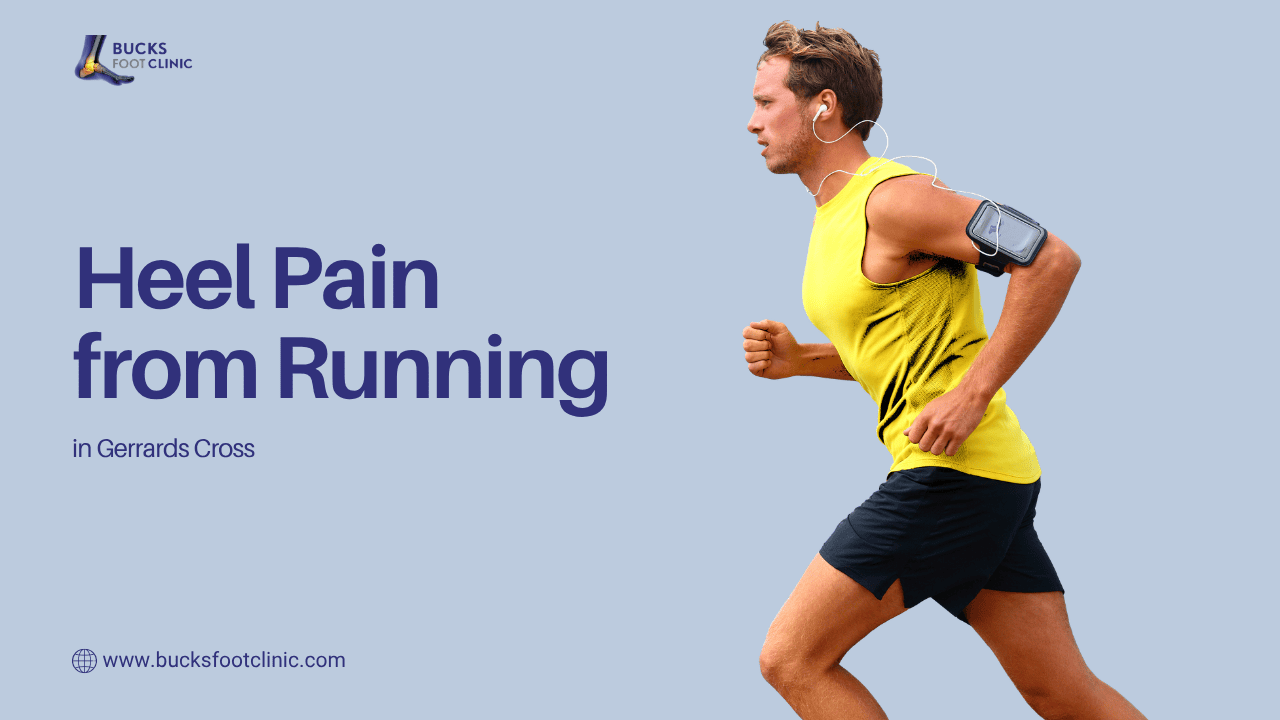
Heel Pain from Running in Amersham and Gerrards Cross: What’s Causing It and How to Fix It
If you’re experiencing heel pain from running in Amersham and Gerrards Cross, you’re not alone. Heel pain is one of the most common complaints we see at Bucks Foot Clinic — and for runners especially, it can feel like a frustrating roadblock. Whether you’re training along the Chiltern trails, pounding pavements around Old Amersham, or squeezing in early morning runs near Gerrards Cross station, heel pain that stops you in your tracks deserves proper attention — not just rest and hope.
Why Does Running Cause Heel Pain?
Running places significant repetitive stress on your feet. Every stride sends a force equal to several times your body weight through your heel. Over time, this can irritate or damage the structures in and around the heel.
The most common causes of heel pain in runners include:
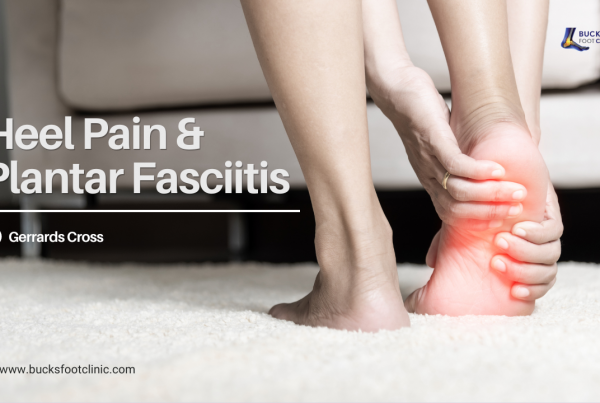
Plantar fasciitis — inflammation of the plantar fascia (the thick band of tissue running along the bottom of your foot, connecting your heel bone to your toes). This is by far the most frequent culprit. You’ll typically feel a sharp, stabbing pain in the heel, worst in the morning or after sitting for a while.
Heel bursitis — inflammation of the bursa (a small fluid-filled sac at the back of the heel). This often causes pain and swelling at the rear of the heel, particularly when wearing shoes.
Achilles tendinopathy — degeneration or irritation of the Achilles tendon (the large tendon connecting your calf muscles to your heel bone). You’ll feel pain and stiffness at the back of the heel, especially when you first start running.
Heel stress fractures — tiny cracks in the heel bone caused by repetitive impact. These are less common but serious and require immediate professional assessment.
Sever’s disease — a growth plate condition affecting younger runners, causing pain at the back of the heel.
Warning Signs You Shouldn’t Ignore
Many runners try to push through heel pain, but some signs tell you it’s time to stop and seek help:
— Pain that worsens as your run progresses rather than easing off after warm-up
— Heel pain that lingers for more than two weeks despite rest
— Swelling, bruising, or visible changes around the heel
— Pain so sharp it alters your gait or causes you to limp
— Discomfort that wakes you up at night
Ignoring these signals often turns a manageable problem into a long-term injury. The sooner you get a proper diagnosis, the sooner you get back to doing what you love.
What Can You Do at Home?
While professional assessment is always the most effective route, there are some sensible steps you can take in the meantime to manage discomfort:
Rest and reduce load: Scale back your mileage. Swap hard-surface runs for softer terrain like grass or trails around the Chiltern Hills where possible.
Ice the area: Apply an ice pack wrapped in a cloth to the heel for 15–20 minutes, two to three times a day. This helps reduce inflammation.
Stretch your calf and plantar fascia: Tight calves are a major contributing factor to plantar fasciitis. Stretch your calves against a wall and roll a frozen water bottle under your foot for targeted plantar fascia relief.
Check your footwear: Worn-out running shoes lose their cushioning and support. If your trainers are over 500 miles old, they may no longer protect your heel adequately.
Avoid barefoot walking on hard floors: Particularly in the morning when the plantar fascia is at its tightest. Supportive slippers or footwear help immediately after getting out of bed.
These measures can ease symptoms, but they don’t address the root cause. That’s where professional podiatric care makes all the difference.
How Bucks Foot Clinic Treats Runner’s Heel Pain
At Bucks Foot Clinic, our HCPC-registered podiatrists bring over 10 years of combined clinical experience to every consultation. We don’t offer generic advice — we carry out a thorough biomechanical assessment to understand exactly why your heel is hurting and what’s driving the problem.
Our treatment approach for heel pain in runners can include:
Custom orthotics: Tailor-made insoles that correct the way your foot strikes the ground, redistributing pressure away from the irritated area.
Shockwave therapy: A clinically proven, non-invasive treatment that stimulates healing in chronic heel conditions like plantar fasciitis and Achilles tendinopathy.
Strapping and padding: Immediate offloading techniques to reduce pain while the underlying issue heals.
Gait analysis: We assess how you walk and run to identify biomechanical patterns — overpronation, supination, poor hip alignment — that contribute to heel stress.
Rehabilitation exercises: A structured programme of stretches and strengthening exercises specific to your diagnosis, helping you return to running safely.
We also use swift microwave technology for associated soft tissue concerns, and we’re proud to hold 5-star Google reviews from patients across Amersham, Old Amersham, and Gerrards Cross.
Why Choose Bucks Foot Clinic?
We understand that heel pain isn’t just a physical issue — it affects your mood, your routine, and your identity as a runner. Our team takes the time to listen, explain your diagnosis clearly, and build a treatment plan that fits your lifestyle and goals.
With two convenient clinic locations — one in the heart of Amersham and one in Gerrards Cross — you won’t have to travel far to access expert podiatric care. We offer same-week appointments, so you’re not left waiting in pain.
📍 Bucks Foot Clinic — Amersham: 18 Woodside Road, Amersham, HP6 6AJ
📍 Bucks Foot Clinic — Gerrards Cross: 14 Station Road, Gerrards Cross, SL9 8EL
🌐 Visit us at bucksfootclinic.com
Ready to get help? Call 01494 304 849 (Amersham) or 01753 260 207 (Gerrards Cross) to book your same-week appointment. Don’t let heel pain keep you on the sidelines — our team is here to get you moving again.
Frequently Asked Questions
Q: How long does heel pain from running take to heal?
A: It depends on the cause and how early you seek treatment. Mild plantar fasciitis can resolve in a few weeks with the right care. Chronic or untreated cases can take several months. Early intervention at Bucks Foot Clinic significantly speeds up recovery.
Q: Should I stop running completely if my heel hurts?
A: Not necessarily. A podiatrist can advise on modified training plans that allow you to stay active while your heel heals. Complete rest isn’t always required — but running through significant pain without guidance often makes things worse.
Q: Can the wrong running shoes cause heel pain?
A: Absolutely. Poorly fitting shoes, worn-out trainers, or footwear that doesn’t suit your foot type can all contribute to heel pain. Our podiatrists can assess your footwear as part of your consultation.
Q: Is shockwave therapy painful?
A: Most patients experience mild discomfort during the treatment, but it’s generally well tolerated and takes only a few minutes. Many people notice significant improvement after just a few sessions.
Q: Do I need a GP referral to see a podiatrist at Bucks Foot Clinic?
A: No. You can book directly with us — no referral needed. Simply call our Amersham or Gerrards Cross clinic and we’ll arrange a same-week appointment for you.