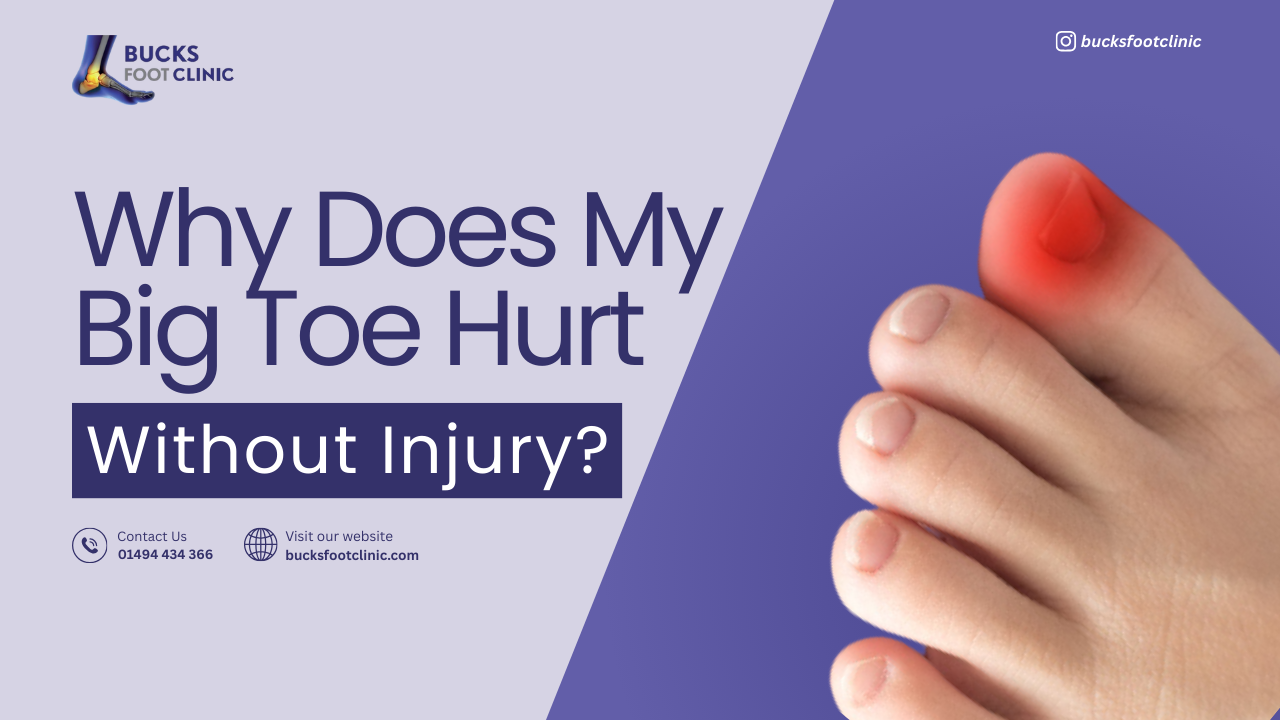
Big toe pain without injury: You wake up with a throbbing big toe, yet you can’t recall injuring it. Or perhaps the pain has developed gradually over weeks without any obvious cause. Big toe pain without injury is surprisingly common and can result from various conditions, some requiring prompt professional attention. Understanding potential causes helps you determine whether your symptoms warrant immediate assessment or can be monitored at home.
At Bucks Foot Clinic, we regularly assess patients experiencing unexplained big toe pain and can quickly identify the underlying cause. If you’re experiencing persistent big toe pain without known injury, contact us on 01494 434366 for expert evaluation.
Common Causes of Non-Traumatic Big Toe Pain
Gout is a form of inflammatory arthritis caused by uric acid crystal accumulation in joints. The big toe is the most commonly affected joint, with attacks typically beginning suddenly, often overnight. The toe becomes intensely painful, red, swollen, and extremely tender to touch—even bedsheet pressure can be unbearable. Gout attacks may be triggered by dietary factors (red meat, seafood, alcohol), dehydration, certain medications, or stress. If you suspect gout, prompt medical assessment is important, as untreated attacks can last days to weeks and recurrent gout can cause permanent joint damage.
Osteoarthritis develops gradually as cartilage cushioning the big toe joint wears down over time. This causes pain, stiffness (particularly first thing in the morning), reduced range of motion, and sometimes visible joint enlargement. Osteoarthritis is more common with increasing age, previous joint injuries, or biomechanical factors causing abnormal joint wear patterns.
Hallux rigidus is a specific form of arthritis affecting the big toe joint (metatarsophalangeal joint), causing stiffness and pain, particularly when pushing off during walking. The toe loses flexibility, making activities like squatting, climbing stairs, or wearing heeled shoes increasingly difficult. Bone spurs may develop, creating a visible bump on top of the joint.
Sesamoiditis involves inflammation of the sesamoid bones (two small bones beneath the big toe joint) and surrounding tendons. This causes pain in the ball of the foot under the big toe, worsening with activity, particularly walking barefoot or wearing flat shoes. Sesamoiditis commonly affects dancers, runners, and people who spend long periods on their feet.
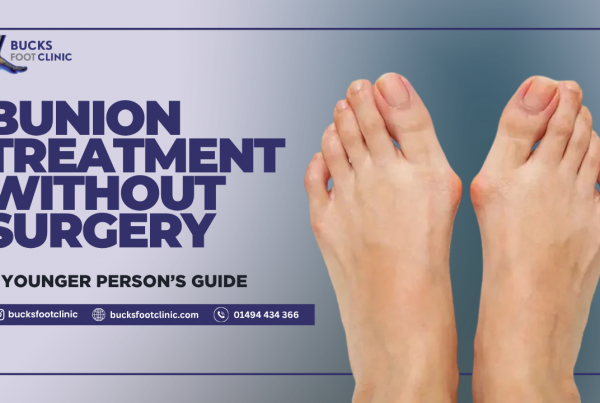
Bunions (hallux valgus) develop when the big toe angles towards the other toes, causing the joint to protrude. This creates a visible bump and can cause pain, particularly in tight footwear. Bunions worsen gradually over time and may be associated with genetic predisposition, inflammatory conditions, or poor footwear choices.
Additional Potential Causes
Morton’s neuroma, whilst typically affecting the third and fourth toes, can occasionally involve the big toe, causing burning pain, tingling, or numbness. Nerve entrapment or neuropathy can cause pain without visible signs of injury, particularly in people with diabetes. Bursitis involves inflammation of fluid-filled sacs cushioning the joints, causing pain and swelling. Stress fractures can develop from repetitive activities without single traumatic injury, causing progressive pain that worsens with weight-bearing.
Referred pain from problems elsewhere in the foot, ankle, or even lower back can manifest as big toe pain. Systemic conditions including rheumatoid arthritis, psoriatic arthritis, and other inflammatory conditions may present initially with big toe symptoms.
How to Prevent Big Toe Pain
Maintain a healthy weight to reduce joint stress. Choose appropriate footwear with adequate toe box space, proper arch support, and cushioning. Avoid high heels and pointed-toe shoes for extended periods, as these increase pressure on the big toe joint.
Stay hydrated and limit purine-rich foods (red meat, organ meats, certain seafood) and alcohol to reduce gout risk. Incorporate low-impact exercise maintaining joint flexibility and strength without excessive stress. Avoid sudden increases in activity intensity or duration that could cause overuse injuries.
Address biomechanical issues with proper footwear or orthotics if you have flat feet, high arches, or gait abnormalities. Regular foot exercises maintain flexibility and strength. If you have diabetes, conduct daily foot inspections and maintain good blood sugar control to prevent neuropathy development.
If you notice any concerning changes or develop unexplained pain, contact Bucks Foot Clinic on 01494 434366 for professional assessment before problems progress.
Why Self-Diagnosis Is Problematic
Accurately identifying big toe pain causes without professional assessment is challenging. Many conditions present with similar symptoms, and appropriate treatment varies dramatically depending on the underlying cause. Gout requires different management than arthritis, which differs from sesamoiditis treatment. Self-diagnosis often leads to inappropriate treatment, delayed proper care, and potential worsening of the condition.
Some causes require urgent attention—untreated gout can cause permanent joint damage, whilst certain systemic conditions need prompt medical management. Missing serious underlying conditions can have significant health implications beyond foot discomfort. Professional assessment includes physical examination, gait analysis, possibly imaging studies (X-rays, ultrasound), and sometimes blood tests to identify inflammatory markers or uric acid levels.
Professional Diagnosis and Treatment
Podiatrists can accurately diagnose big toe pain through comprehensive assessment. For gout, initial treatment involves anti-inflammatory medications and lifestyle modifications, with follow-up to prevent recurrent attacks. Osteoarthritis and hallux rigidus management includes footwear modifications, anti-inflammatory medications, corticosteroid injections, custom orthotics, and in severe cases, surgical options.
Sesamoiditis treatment involves rest, ice application, footwear modifications, padding or orthotics to reduce pressure, and occasionally immobilisation. Bunion management ranges from conservative care (appropriate footwear, padding, orthotics) to surgical correction for severe cases significantly impacting function or quality of life.
At Bucks Foot Clinic, we provide comprehensive assessment identifying the exact cause of your big toe pain and developing an effective treatment plan tailored to your specific condition and circumstances.
When to Seek Immediate Help
Sudden, severe big toe pain with significant redness, swelling, and warmth may indicate gout or infection requiring prompt treatment. Big toe pain accompanied by fever or feeling generally unwell suggests possible infection. Inability to bear weight or move the toe warrants immediate assessment. Rapidly worsening symptoms over hours to days, particularly with spreading redness, require urgent evaluation.
For people with diabetes, any unexplained foot pain requires prompt professional assessment due to increased infection and complication risks. Symptoms affecting multiple joints simultaneously may indicate systemic inflammatory conditions requiring comprehensive medical evaluation.
The Bottom Line
Big toe pain without obvious injury can result from various conditions, from inflammatory arthritis to biomechanical problems. Accurate diagnosis is essential for effective treatment and preventing complications. Self-diagnosis and inappropriate treatment can delay recovery and potentially worsen your condition.
At Bucks Foot Clinic, our experienced podiatrists can quickly identify what’s causing your big toe pain and recommend the most appropriate treatment approach. Don’t suffer with unexplained pain or waste time guessing what’s wrong. Contact Bucks Foot Clinic today on 01494 434366 to schedule your consultation for accurate diagnosis and effective treatment.