
Spot the Signs and Learn About Prevention and Treatment Options
Are you noticing discomfort or a bump forming at the base of your big toe? You might be wondering if it’s a bunion. Bunions are a common cause of foot pain, and understanding them early can help prevent unnecessary discomfort. At Bucksfootclinic.com, we are here to guide you through the signs, causes, and solutions for bunions. This article will educate you on prevention, treatment options, and actionable steps to keep your feet healthy.
What Exactly Are Bunions?
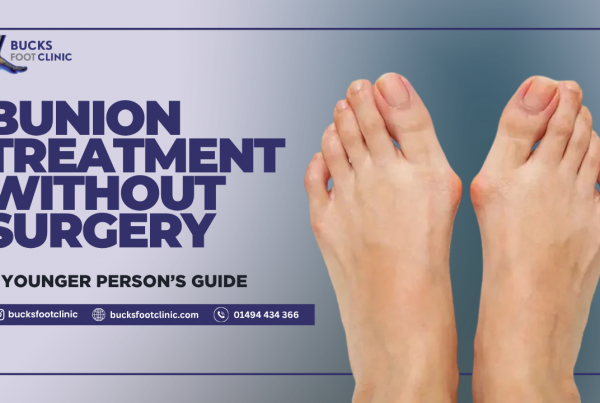
A bunion is more than just a bump on your toe—it’s a structural issue that occurs when the big toe joint becomes misaligned. This misalignment causes the big toe to lean toward the others, often leading to visible swelling and foot pain. If you’ve experienced soreness or noticed a change in your foot’s appearance, it might be time to consider whether you have a bunion.
What causes bunions? Here are the most common factors:
- Inherited foot structure or genetics
- Wearing tight, narrow, or high-heeled shoes
- Arthritis, especially rheumatoid arthritis
- Foot injuries or abnormalities
Catch the signs early, and you can address the issue before it worsens!
Could Your Foot Pain Be a Bunion? Know the Signs
If you’re unsure whether you have a bunion, these common symptoms can help you identify the problem:
- A noticeable bump on the side of your big toe joint
- Redness, swelling, or tenderness around your toe
- Persistent pain that worsens after wearing shoes
- Limited movement in the big toe
- Calluses or corns caused by overlapping toes
If these symptoms sound familiar, it’s time to take action. A podiatrist can provide clarity and recommend the best solutions for your feet.
5 Actionable Steps to Prevent Bunions
Even if bunions run in your family, there are steps you can take to minimise your risk and ensure foot health:
1. Invest in Shoes That Support Your Feet
Choose footwear with a wide toe box to avoid pressure on your toes. Ditch the high heels and pointed shoes for more supportive options with proper arch support and cushioning.
2. Maintain a Healthy Weight
Excess weight places undue stress on your feet, increasing the risk of bunions. Keeping active and eating a balanced diet can alleviate this pressure.
3. Pay Attention to Foot Hygiene and Care
Regularly clean and moisturise your feet to prevent skin issues that could exacerbate bunion discomfort. Keep an eye out for any changes in foot structure and seek professional advice if needed.
4. Consider Orthotic Inserts
Orthotic devices, such as specially designed insoles, help align your feet and distribute weight evenly. They’re particularly useful for people with flat feet or other structural concerns.
5. Strengthen Your Foot Muscles
Simple exercises, like toe stretches and picking up small objects with your toes, can strengthen foot muscles and improve stability. Stronger muscles can keep bunions at bay.
Options for Treating Bunions
If you suspect you already have a bunion, don’t worry—effective treatment is available. Based on the severity, treatments range from non-invasive methods to surgical solutions:
Non-Surgical Treatments
If your bunion is mild, start with these options to manage discomfort:
- Padding and Taping: Reduce friction and alleviate pain with protective pads or realignment taping.
- Medication: Over-the-counter pain relievers can offer temporary relief.
- Physical Therapy: Targeted exercises improve mobility and reduce pain.
- Custom Orthotics: Specialised insoles can correct alignment and ease pressure.
Surgical Treatments
For severe bunions causing chronic pain or difficulty walking, surgical options may be necessary:
- Bunionectomy: Removes the bunion and adjusts the toe joint’s alignment.
- Osteotomy: Reshapes the bones in the affected joint for better alignment.
- Arthrodesis: Fuses the problematic joint to eliminate movement-related pain.
A podiatrist can help you decide which treatment is best for your specific needs.
When Should You See a Podiatrist?
If you think you might have a bunion—or you’re experiencing persistent foot pain—the sooner you consult a podiatrist, the better. Early intervention can prevent complications and help you maintain mobility and comfort.
#1:
Think you might have a bunion? Find out for sure by booking an appointment at Bucksfootclinic.com today. Our expert podiatrists are here to diagnose and treat your foot pain effectively.
#2:
Don’t ignore your foot discomfort. Call Bucksfootclinic.com now to learn more about our personalised care options for bunions and other foot conditions. Your foot health is our priority!
Take Your First Step to Heel Pain Relief
Bunions may start small, but the impact on your life can grow if left unaddressed. Whether you suspect you might have a bunion or you’re looking for prevention strategies, we at Bucksfootclinic.com are here to support you. From educating you on foot health to offering tailored treatments, our team is ready to help you step into a more comfortable future.
Don’t wait—take action today and give your feet the care they deserve!
Bunions FAQ
What is a bunion?
A bony bump that forms at the base of the big toe joint when the toe pushes against the next toe, causing the joint to stick out.
What causes bunions?
Genetics, tight or narrow shoes, high heels, foot injuries, arthritis, abnormal foot structure, and conditions affecting joints and connective tissue.
Are bunions hereditary?
Yes. Inherited foot structure and mechanics play a significant role, making bunions more likely if family members have them.
What are the symptoms of bunions?
Visible bump on big toe joint, pain or soreness, redness and inflammation, restricted toe movement, corns or calluses, and difficulty wearing shoes.
Do high heels cause bunions?
High heels don’t directly cause bunions but can worsen existing conditions and accelerate their development by forcing toes into narrow spaces.
Can bunions get worse over time?
Yes. Bunions are progressive deformities that typically worsen without proper care, making early intervention important.
What should I do if I notice a bunion forming?
Switch to properly fitted shoes with wide toe boxes, use protective padding, consider orthotics, and consult a podiatrist for early treatment.
What type of shoes should I wear?
Wide toe boxes, low heels, soft materials, good arch support, and adequate depth. Avoid pointed toes, narrow shoes, and high heels.
Can bunion pads help?
Yes. Cushioning pads and toe spacers can reduce friction, relieve pressure, prevent rubbing, and provide temporary pain relief.
Do orthotics help with bunions?
Yes. Custom orthotics can improve foot alignment, redistribute pressure, slow progression, and reduce pain, though they won’t eliminate existing bunions.
What home remedies provide relief?
Ice packs for inflammation, padding and taping, proper footwear, toe exercises, over-the-counter pain relievers, and avoiding aggravating activities.
Should I use a bunion splint?
Splints may provide temporary relief and help maintain alignment at night, but they won’t correct the deformity permanently.
What exercises help bunions?
Toe stretches, toe curls, marble pickups, resistance band exercises, and gentle joint mobilization can maintain flexibility and strength.
When should I see a podiatrist?
If you experience persistent pain, difficulty walking, progressive deformity, restricted movement, or if self-care measures aren’t helping.
What professional treatments are available?
Custom orthotics, padding techniques, anti-inflammatory medications, cortisone injections, physical therapy, and in severe cases, surgery.
Is bunion surgery necessary?
Surgery is only recommended when conservative treatments fail and pain significantly interferes with daily activities and quality of life.
What does bunion surgery involve?
Realigning the bone, removing excess tissue, and correcting the toe position. Recovery typically takes several weeks to months.
Can bunions come back after surgery?
Yes, if underlying causes like improper footwear or genetic factors aren’t addressed, bunions can recur even after surgical correction.
How can I prevent bunions?
Wear properly fitted shoes with adequate toe room, avoid high heels and pointed toes, maintain healthy weight, and addr