Bunions Don’t Just Happen to Your Nan: A Younger Person’s Guide
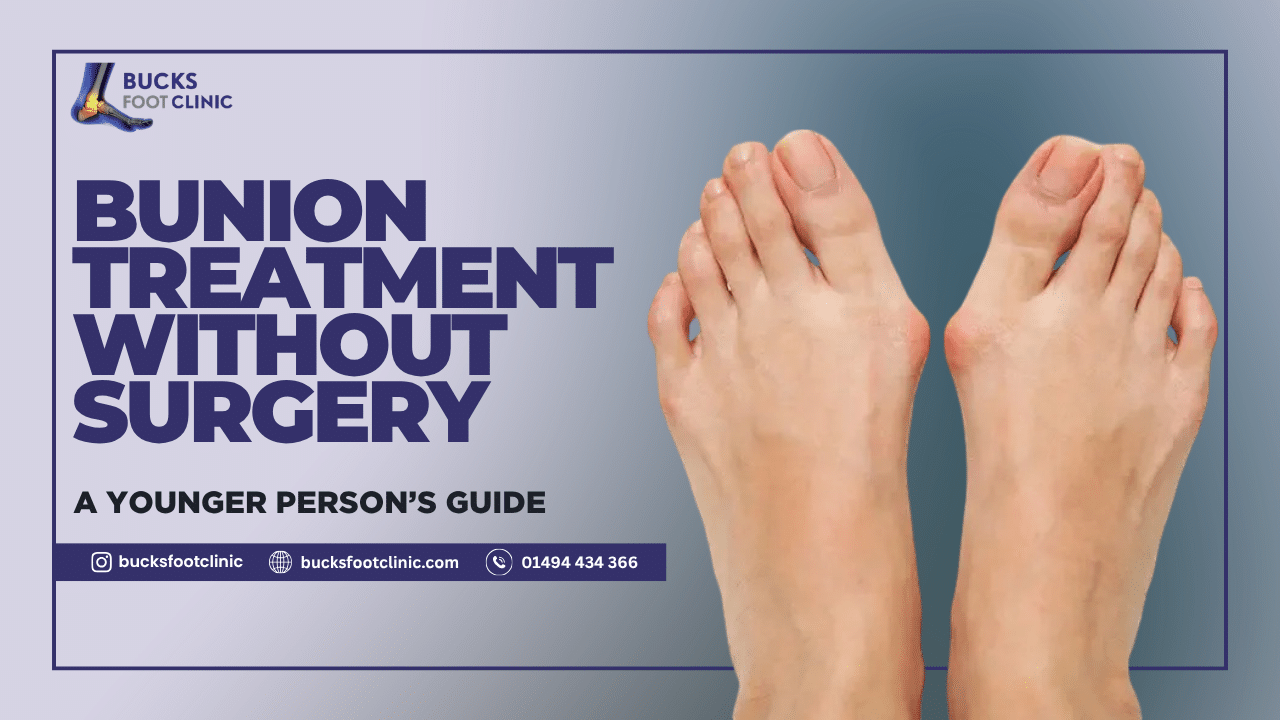
When most people picture bunions, they imagine an elderly relative’s feet. But bunion treatment without surgery is increasingly sought by younger adults, people in their twenties, thirties, and forties who are developing painful, bony bumps at the base of their big toes and can’t understand why. Bunions don’t discriminate by age, and the earlier you address them, the more options you have.
What Actually Is a Bunion?
A bunion (hallux valgus) isn’t simply a lump of extra bone. It’s a progressive misalignment of the joint at the base of the big toe. The first metatarsal bone drifts outward whilst the big toe angles inward toward the second toe. Over time, this creates the characteristic bump on the inner side of the foot. It’s a structural deformity, not just a cosmetic issue, and it can significantly affect how you walk, what shoes you can wear, and your overall quality of life.
Why Younger People Get Bunions
Genetics play a far bigger role than most people realise. If your parents or grandparents had bunions, you’re significantly more likely to develop them too. You don’t inherit the bunion itself, you inherit the foot structure (flat feet, hypermobility, specific bone shapes) that predisposes you to one. Footwear can accelerate the process, narrow shoes, pointed toes, and high heels force the big toe into an angled position, but they’re rarely the sole cause. Athletes, particularly dancers and runners, can develop bunions earlier due to repetitive stress on the forefoot.
How to Prevent Bunions from Worsening
- Choose shoes with a wide, roomy toe box that allows your toes to sit in a natural position
- Avoid pointed-toe shoes and high heels for daily wear save them for occasional use
- Strengthen the muscles around your big toe joint with exercises like toe spreads and marble pickups
- Wear toe spacers or separators at home to gently encourage the toe back toward its natural alignment
- If you have flat feet or overpronation, address these with appropriate footwear or orthotics, as they contribute to bunion progression
- Don’t ignore the early signs the earlier you intervene, the more effective non-surgical management can be
Struggling with this problem? Call Bucks Foot Clinic on 01494 434366 or book online at bucksfootclinic.com for expert advice and treatment.
Why See a Podiatrist Before Considering Surgery
Surgery for bunions (bunionectomy) exists, but it’s major foot surgery with a significant recovery period. For many people, especially those with mild to moderate bunions, professional non-surgical management can effectively control pain and slow progression for years or even indefinitely.
A podiatrist assesses the severity of your bunion, evaluates your foot biomechanics, and creates a management plan that addresses your specific needs. This is far more effective than buying a bunion corrector from Amazon and hoping for the best. Those devices may provide temporary symptom relief, but they cannot reverse a structural deformity or address the underlying biomechanics driving it.
How Bucks Foot Clinic Manages Bunions
- Comprehensive assessment of your bunion severity, foot structure, and biomechanics
- Bespoke orthotics designed to redistribute pressure away from the bunion joint and correct contributing factors like overpronation
- Footwear advice tailored to your lifestyle practical recommendations, not simply “wear wider shoes”
- Padding and protection to reduce friction and pressure on the bunion
- Joint mobilisation techniques to maintain range of motion in the affected joint
- Honest assessment of whether surgery might be appropriate, with referral if needed
Worried about a bunion? Get expert advice early. Contact Bucks Foot Clinic today on 01494 434366 to book your appointment, or visit bucksfootclinic.com. We have clinics in Amersham, Chesham, and Little Chalfont.