Achilles Tendon Pain: Why “Running Through It” Is the Worst Advice You’ll Get
Your mate at the running club says push through it. The internet says rest it. Your physio friend says load it. Everyone has an opinion about Achilles tendon pain treatment, and the conflicting advice is maddening — especially when your Achilles is stiff every morning, burns during exercise, and simply refuses to get better. Here’s the truth: both complete rest and pushing through the pain are wrong. The correct approach is more nuanced, and understanding why makes all the difference.
Tendinitis vs Tendinopathy: Why the Distinction Matters
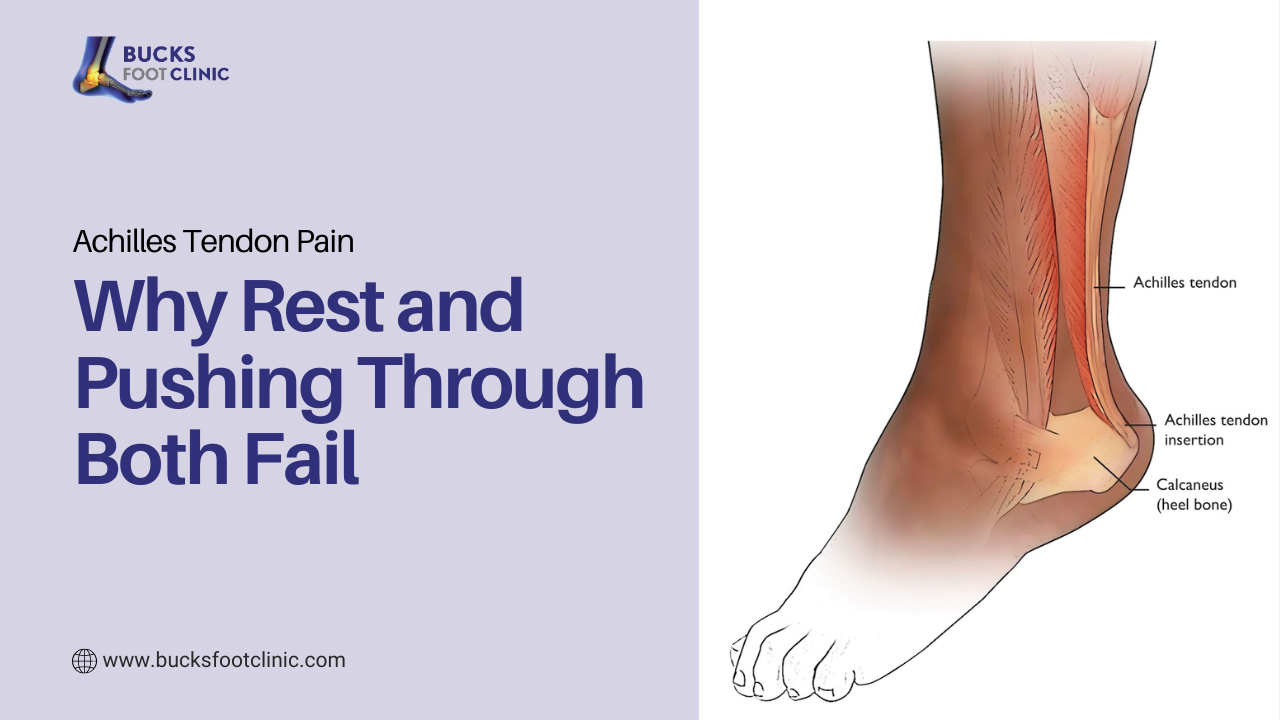
Achilles “tendinitis” implies inflammation, but research now shows that most persistent Achilles problems aren’t inflammatory at all. The correct term is tendinopathy — a condition where the tendon tissue degenerates and fails to repair properly. The collagen fibres that make up the tendon become disorganised, the tendon thickens, and its ability to handle load decreases.
This distinction matters because treatments aimed at reducing inflammation (ice, anti-inflammatory drugs, complete rest) don’t address the actual problem. The tendon needs controlled, progressive loading to stimulate proper tissue repair and remodelling. Too little load (complete rest) causes further weakening. Too much load (pushing through pain) causes further damage. The sweet spot is structured rehabilitation.
Struggling with this problem? Call Bucks Foot Clinic on 01494 304 849 or book online at bucksfootclinic.com for expert advice and treatment.
How to Prevent Achilles Tendon Problems
- Increase training volume and intensity gradually — avoid sudden jumps in mileage or speed work
- Stretch your calves and Achilles tendons regularly, both before and after exercise
- Strengthen your calves with eccentric exercises (heel drops from a step) as a preventative measure
- Wear supportive footwear with adequate heel height for your activity
- Warm up properly before exercise and avoid starting with explosive movements
- Address any biomechanical issues early, particularly overpronation
- Don’t ignore early symptoms — mild stiffness that resolves with activity can progress to significant tendinopathy if ignored
Why Self-Management Often Fails
The challenge with Achilles tendinopathy is that it requires precisely calibrated loading. Too much and the tendon worsens. Too little and it weakens. Generic advice like “rest until it feels better, then start running again” typically leads to a cycle of improvement and relapse because the tendon hasn’t been properly rehabilitated.
A podiatrist assesses your tendon, your biomechanics, and your activity level to design a rehabilitation programme that loads the tendon progressively and appropriately. This is combined with addressing any biomechanical factors (via orthotics) that contributed to the problem developing.
Achilles pain that won’t shift? Let’s find out why. Contact Bucks Foot Clinic today on 01494 304 849 to book your appointment, or visit bucksfootclinic.com. We have clinics in Amersham, Chesham, and Little Chalfont.
How Bucks Foot Clinic Treats Achilles Tendon Pain
- Thorough assessment of the tendon including its thickness, tenderness, and response to loading
- Biomechanical assessment to identify contributing factors
- Structured eccentric loading programme tailored to your current capacity
- Bespoke orthotics if biomechanical correction is needed
- Shockwave therapy for chronic tendinopathy that hasn’t responded to exercise alone
- Guidance on activity modification during rehabilitation our goal is to keep you moving, not to stop you
We also provide honest advice about recovery timelines. Achilles tendinopathy is typically a slow-healing condition, and we’d rather set realistic expectations than make promises we can’t keep. Most patients see significant improvement within 8–12 weeks of structured rehabilitation.