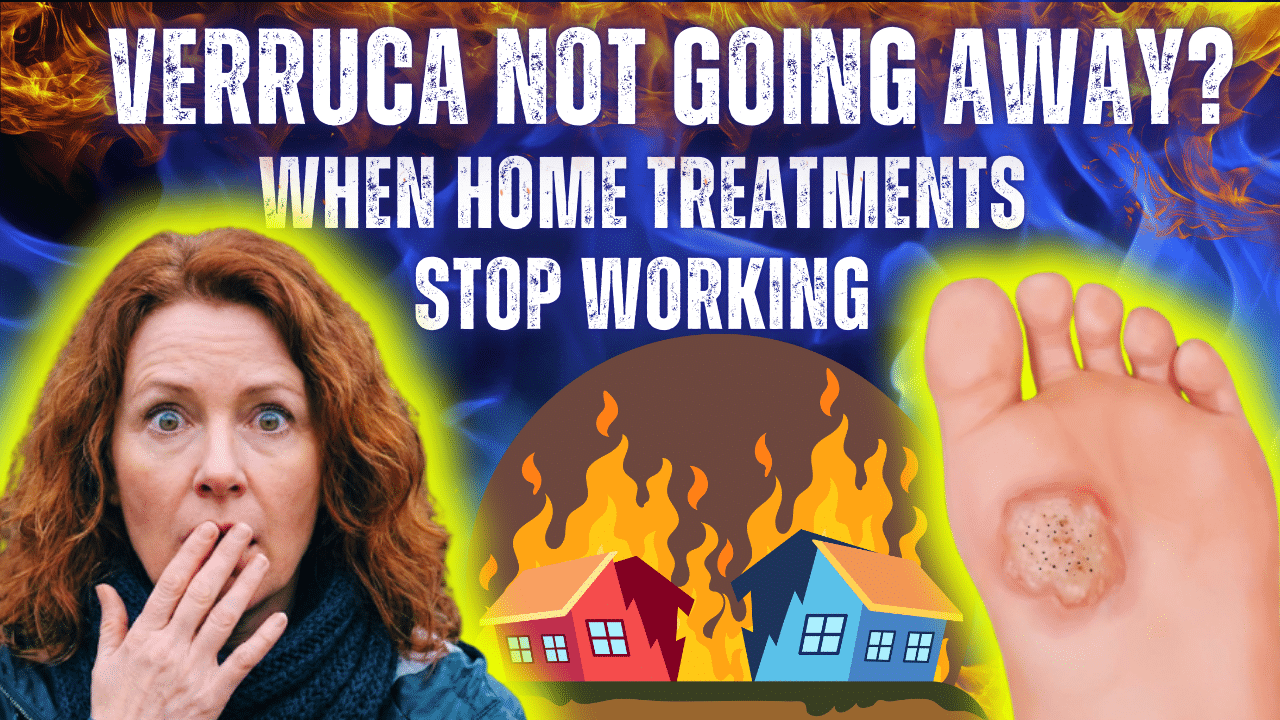
You’ve tried every over-the-counter treatment available, following instructions religiously for weeks or months. Yet that verruca on your foot refuses to budge. If this sounds familiar, you’re not alone. Verrucae are notoriously stubborn, and whilst some respond well to home treatments, many require professional intervention to eliminate completely.
Understanding why your verruca isn’t responding and knowing when to seek professional help can save you months of frustration. At Bucks Foot Clinic, we specialise in treating persistent verrucae. Contact us on 01494 304 849 for expert assessment and treatment.
Why Verrucae Are So Stubborn
Verrucae (plantar warts) are small, rough growths caused by the human papillomavirus (HPV) that appear on the soles of your feet. Unlike warts elsewhere, verrucae grow inwards due to walking pressure, making them particularly uncomfortable and difficult to treat. The virus infects the top skin layer, usually entering through tiny cuts, causing rapid cell growth that creates the characteristic hard, grainy appearance.
The immune system sometimes fails to recognise the infection, allowing the verruca to thrive for months or years. Additionally, the thick skin on foot soles makes it difficult for topical treatments to penetrate effectively. Verrucae can spread to other foot areas or to other people through direct contact or contaminated surfaces, commonly contracted in swimming pools and communal showers.
Why Home Treatments Often Fail
Salicylic acid treatments are the most common home remedy, available as gels, paints, or plasters. These work by gradually dissolving infected skin layers but require consistent daily application for weeks or months and often struggle to penetrate deeply enough. Pharmacy freezing treatments use dimethyl ether and propane at around -57°C, significantly less cold than professional cryotherapy (which reaches -196°C with liquid nitrogen), making them less effective for stubborn verrucae.
Duct tape occlusion involves covering the verruca with tape for extended periods, theoretically irritating the skin enough to trigger an immune response, but evidence is mixed. Filing and scraping can actually spread the virus to surrounding skin if done incorrectly, potentially worsening the problem.
How to Prevent Verrucae
Protect your feet in public areas by wearing flip-flops or waterproof sandals in swimming pools, communal showers, and gym changing rooms. Never walk barefoot in these environments. Maintain good foot hygiene by washing daily and drying thoroughly, especially between toes. Don’t share towels, socks, or shoes, and avoid touching verrucae on yourself or others. Keep feet dry by changing socks regularly and alternating shoes. Address any skin cuts promptly, as these provide virus entry points.
Despite these precautions, verrucae can still develop. Early professional treatment typically achieves better results than waiting. Call Bucks Foot Clinic on 01494 304 849 for guidance.
Professional Treatment Options
Cryotherapy with liquid nitrogen reaches temperatures of -196°C, far colder than pharmacy freezing treatments, destroying infected tissue more effectively. Needling (Falknor’s technique) is highly effective, where the verruca is punctured multiple times under local anaesthetic, introducing viral particles into the bloodstream and triggering a robust immune response that can clear multiple verrucae.
Swift microwave therapy uses precise microwave energy to heat and destroy infected tissue, showing promising results for resistant verrucae. Surgical excision may be appropriate for particularly stubborn cases, whilst immune-boosting treatments can stimulate your body’s natural defences. Accurate diagnosis ensures you’re actually treating a verruca and not a corn or callus misdiagnosis is common with self-treatment.
At Bucks Foot Clinic, we assess your specific situation and recommend the most appropriate treatment based on the verruca’s characteristics and your medical history.
When to Seek Professional Help
Duration of more than 12 weeks with home treatment showing no improvement suggests the verruca won’t respond to over-the-counter options. Pain or discomfort affecting daily activities, exercise, or gait warrants professional intervention. Spreading verrucae with new lesions appearing indicate your home treatment isn’t controlling the infection. Uncertainty about diagnosis, diabetes or immune conditions, and multiple verrucae or mosaic warts typically require professional treatment.
Don’t let embarrassment prevent you from seeking help. Podiatrists treat verrucae daily and understand how frustrating these persistent infections can be.
The Bottom Line
Whilst some verrucae resolve with home treatments, many persist for months or years without professional intervention. If you’ve been battling a stubborn verruca for more than three months, it’s time to explore more effective treatment options.
At Bucks Foot Clinic, we offer advanced treatments that achieve results when home remedies fail. Our experienced podiatrists will assess your specific situation and recommend the most effective approach for eliminating your verruca completely. Don’t waste more time and money on ineffective treatments. Contact Bucks Foot Clinic today on 01494 304 849 to schedule your consultation and take the first step towards verruca-free feet.